
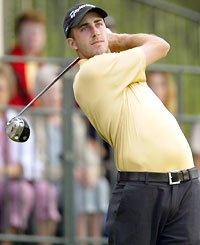
 The Chrysler Classic of Tucson has become the premier event for first time winners on the PGA Tour. Today, Australian Geoff Ogilvy joined the winners club thanks to his clutch performance on the second playoff hole. Ogilvy began the day tied for the lead along with Kevin Na, the youngest player on Tour. When regulation was over, three players were tied for the lead at -19. Ogilvy, Na, and veteran Mark Calcavecchia who battled for a round of 69 to get into the playoff.
On the first playoff hole, Calcavecchia found a fairway bunker and took two shots to finally escape netting a double bogey which took him out of the running for the title. This was Calcavecchia’s 26th time to place 2nd in a tournament. Ogilvy made par easily while Na scrambled to get up and down from the rough to save par and extend the playoff. The next hole was the par-5 10th. Both Na and Ogilvy missed the fairway and ended up in a grove of trees.
Continue reading “Chrysler Classic: New Faces and Old Places”
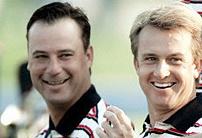 No bracket could have predicted this outcome. How could just one top-seed make it through to the semi-finals? Although the dream match of Tiger Woods vs. Phil Mickelson didn’t materialize, the semi-finals of the Accenture WGC World Match Play provided some memorable golf. The matches were set. The first match of the day would pit uber-conservative David Toms against bleach-blond, spiky-haired Ian Poulter. In the second match, Chris DiMarco a fiery competitor would take on Retief Goosen the stoic South African. Could there be any greater contrast in styles? So how did these fire and ice matches play out?
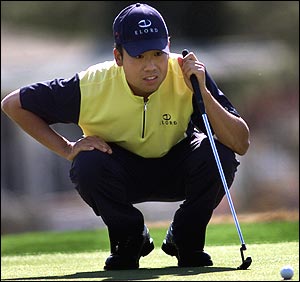 You better keep your eye on Kevin Na. He is the youngest player on the PGA tour but is getting used to feeling the weekend heat, finishing ahead of second round leader Calcavecchia. He finished tied for second at the FBR Open behind Phil Mickelson earlier this month and is showing maturity and poise against some great golfers this season. Na’s 7 under 65 was good enough to tie Geoff Ogilvy for today’s lead.
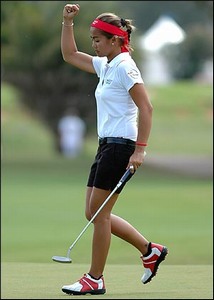 The LPGA kicked off the year with its first full-field event, the
  The Chrysler Classic in some people’s minds (perhaps mine) plays second fiddle to the Accenture WGC World Match Play. While that may or may not be true the Classic allows some less prominent figures on the PGA tour to strut their stuff as is proved by the occupants of the winner’s circle for the last five years: Carter, Willis, Leggatt, Lickliter and Slocum.
 When Friday began at the World Match Play, the big news was that the tour would be able to complete two days of golf in a row without being interrupted by the rains that have been so oppressive over the last week in Southern California. By the end of the day, the big story changed from the beautiful weather to the huge upsets occurring throughout the day.
 Call it February madness, the Accenture WGC World Match Play Championships are the closest thing the golf world has to NCAA basketball’s big dance. Thankfully, Lake La Costa managed to dry up enough to allow play to continue albeit with minor alterations. The 467-yard 9th hole is normally a par-4, but the torrential rains forced tournament organizers to change it into a 160-yard par-3. The first round of competition included some very surprising results for high-seeded players. Earlier this week, we gave you
 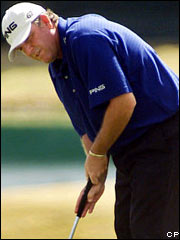 Although the Accenture WGC Matchplay Championship garners much of the media attention this week, there is another PGA Tour event with some recognizable names teeing it up this week in Tucson, Arizona.