
 The
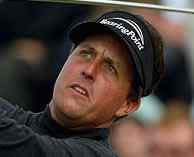
The Phoenix FBR Open began rather mundanely for Phil Mickelson with a +2 round of 71 in the strong, gusting Thursday winds at the TPC of Scottsdale. Friday’s round was anything but mundane: a blistering 60 put Philly Mick in a tie for the lead heading into weekend play at the rowdiest stop on tour.
Mickelson, an Arizona State alumnus who lived in Scottsdale before moving to California, tied the course record (Grant Waite in 1996, Mark Calcavecchia in 2001). He birdied his last five holes of the round, so 59 was never really a tangible possibility, but the round marks Phil’s best ever PGA Tour score. Many recall the 59 Phil shot in last November’s Grand Slam of Golf. Said Phil of his 60, “It was a wonderful day. No complaints here.”
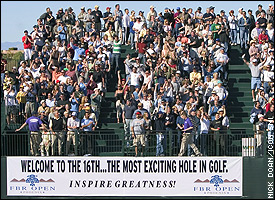 The FBR Open, formerly the Phoenix Open, has a long history as the rowdiest stop on Tour. We mentioned it in
 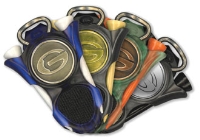 Throughout my years of golfing, I’ve developed a system. Tees and and coins in one pocket, pencil and ball mark repair tool in other. If I put my pencil in with the tees, well, it’s hard to tell the difference quickly, and the same can be said of mixing repair tool and coin. If I’m thirsty at the turn and only have three quarters, well, it’s PowerAde or ball markers for the back nine. PowerAde usually wins out.
 My annual trek to Orlando included a round of golf with the good folks from Callaway Golf, giving me a chance to try some of the company’s new clubs and balls. While the really new stuff — like either of the prototype Fusion drivers being tested on tour, or the softer prototype HX Tour ball that Phil Mickelson is playing — stayed under wraps, there was still a wide berth of Berthas to put through their paces. Here’s one hacker’s opinion on Callaway’s latest products to hit the market, based on a morning of scramble golf.
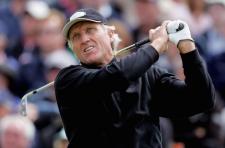 When the Champions Tour first became popular in the 1980s (then known as the Senior Tour), much of the reason for its popularity was due to the fact that “baby-boomers” could watch their childhood idols play tournament golf again. Players such as Arnold Palmer, Gary Player, and Billy Casper, all great players in the 1960s could now be seen competing and winning once again. It was competitive golf and wonderful nostalgia all rolled into one.
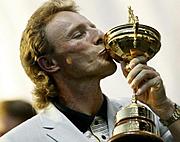 Early in November of 2004, the
  PGA.com touts tomorrow’s
 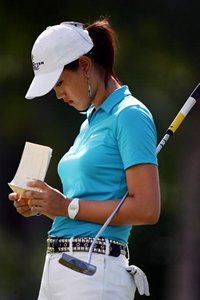 Michelle Wie. Yeah, you thought we were done talking about her, right? Psych! Wie has accepted an invitation to play in the Evian Masters in France and, because of a new policy in LPGA Tour rules, she’ eligible to play in the Women’s British Open as well. Those starts would bump Wie’s LPGA Tour start tally to eight and would include all four majors.
 Justin Leonard may have just switched to Nike, but it didn’t hold him back at all as