Jump to content
Check out the Spin Axis Podcast! ×
Note: This thread is 6296 days old. We appreciate that you found this thread instead of starting a new one, but if you plan to post here please make sure it's still relevant. If not, please start a new topic. Thank you!

Recommended Posts

Posted
Well I have hurd two different theorys on how this works. I have a swing of around 111 and I am thinking of re-shafting. I have hurd that having too stiff a shaft will slice. wich doesn't make logic to me. I thought that having too little would as a high swing rate would torque the club back and could remain there through impact. I swung a friends driver that had a reg shaft and I sliced hard but when I swung my driver I only sliced 10 ft off.(still bad but not as bad as the other driver was in the next fairway.) So would stiffer shafts be better at around 109-112 or do I go with regular. I would like to get rid of the slice and make it more of a push if nothing more than cure it. Does anyone know if a slice is cause by a swing too strong with regular or more with a underswing on a stiff?

Also if I don't reshaft I will be buying new so either way I would like to have some idea before I go. And yes I will be getting fitted but I would like some kind of idea on what I might be looking at.

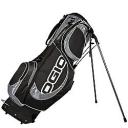
Bag: Ogio
Driver: Cleveland HiBore XLS 9.5 gold stiff
3W: Pro Select 15*
Irons: Pro Select 3-PW
Wedge:Adams Tom Watson set GW, SW, LWPutter: Cleveland VP 1balls: E6+ or Srixonshoes: Adidas powerband"Stop looking at my ears and play!"Home course. Antler Creek; tees; Black 77.5/150, Gold...


Posted

As of yet, shafts manufacturers are not bound by an industry standard, so it's possible that your friends R (regular) flex could be stiffer than your S (stiff) flexed shaft.

In addition to flex, graphite shafts have two other major characteristics which effect its performance. Those are shaft torque and shaft bend point, which is sometimes called kick point.

Flex. When a shaft is first swung down, the club head will bend back and potential energy will build up in the shaft. Later in the downswing, the shaft will rebound and the club head will gain speed. The goal is to match the correct shaft flex to your swing speed so that the club head returns back to it's original square position relative to how it was aligned at address.

Many golfers with slower swing speeds slice when using shafts that are too stiff. These shafts are less flexible and the flex/rebound cycle is slower compared to a more flexible versions. What happens is that the club face does not have enough time to rebound back to square.

Having a shaft that is too soft & flexible can have the opposite effect where the golfer may suffer hooked shots with a closed face. Here, the club head rebounds and continues to accelerate ahead of the shaft line.

Torque. This parameter is measured in degrees and represents how much a shaft can be twisted. The higher the number, the more degrees is gives. Club head weight and swing speed are things to consider when selecting the correct torque value. The faster the swing speed, the lower the amount of toque is needed, for example.

Bend/Kick point. Shaft manufacturers can position where on the length of the shaft it flexes the most. This parameter allows the golfer to adjust the ball flight trajectory. The lower the kick point (closer to the club head,) the higher the trajectory.

IMHO, I highly recommend getting fitted by an experienced and competent club fitter. Fine tuning these, and other parameters can drastically improve your performance.

Best of luck


Posted
As of yet, shafts manufacturers are not bound by an industry standard, so it's possible that your friends R (regular) flex could be stiffer than your S (stiff) flexed shaft.

Excellent advise. I would also suggest getting fitted. My average driver swing is 118mph and I use a high kick point, very low torque, extra stiff shaft. Your swing may differ than mine though so that may not be the best choice for you but should serve as a decent starting point.

I do have one minor contention with the above post however...
Having a shaft that is too soft & flexible can have the opposite effect where the golfer may suffer hooked shots with a closed face. Here, the club head rebounds and continues to accelerate ahead of the shaft line.

I'd just like to add that: Having a shaft that is too soft & flexible can have a similar effect where the golfer may suffer sliced shots with a open face. Here, the club head rebounds late and lags way behind the shaft line.

I say this because it was the exact issue that I had with my old driver (that had a mid kick point, high torque, stiff shaft). With my swing I was more or less "overloading" the shaft and my release is late enough that the club head never had a chance to catch up. This would result in a high soft cut. Generally this only happened when my timing was a bit off. When my timing was perfect, I hit the driver great. The problem with that is that the swing I needed for this perfect timing was not my natural swing and thus required 3x the practice to maintain. Since switching drivers (well, mainly shafts really) I've become a lot more comfortable over the ball, swing much more naturally, hit better shots and have a lot more fun on the t-box. Get fitted. I tried over 50 combinations over a 3 week period before I pulled out the credit card. It was a lot of fun to see how making minor changes here and there affected ball flight. It was also a great learning experience. Good luck!

Yonex Ezone Type 380 | Tour Edge Exotics CB Pro | Miura 1957 Irons | Yururi Wedges | Scotty Cameron Super Rat | TaylorMade Penta


Posted
Thank you for the input. When I get back to my home town I will definatly be contacting the shop that I have hurd to be best in town. Can't really do much while in chicago but when I get back to CO I will be at the shop that week I hope.

Bag: Ogio
Driver: Cleveland HiBore XLS 9.5 gold stiff
3W: Pro Select 15*
Irons: Pro Select 3-PW
Wedge:Adams Tom Watson set GW, SW, LWPutter: Cleveland VP 1balls: E6+ or Srixonshoes: Adidas powerband"Stop looking at my ears and play!"Home course. Antler Creek; tees; Black 77.5/150, Gold...


Posted
Definitely get fitted. There are no truisms to golf shafts. They can be any spec as there is no standard and there is no way to know a shaft is right and what the ball flight will be unless you hit it. A too stiff shaft can slice or hook depending on YOUR swing and vice versa with a too soft shaft. A softer shaft may add distance or it may not. Not everybody swings to catch the rebound depending on how they load the club. So, regrettably, its takes a lot of time and work to find the perfect shaft, but, not so much to find a decent shaft for your swing.

Note: This thread is 6296 days old. We appreciate that you found this thread instead of starting a new one, but if you plan to post here please make sure it's still relevant. If not, please start a new topic. Thank you!

Create an account or sign in to comment

You need to be a member in order to leave a comment

Create an account

Sign up for a new account in our community. It's easy!

Register a new account

Sign in

Already have an account? Sign in here.

Sign In Now


  • Want to join this community?

    We'd love to have you!

    Sign Up
  • TST Partners

    PlayBetter
    Golfer's Journal
    ShotScope
    The Stack System
    FitForGolf
    FlightScope Mevo
    Direct: Mevo, Mevo+, and Pro Package.

    Coupon Codes (save 10-20%): "IACAS" for Mevo/Stack/FitForGolf, "IACASPLUS" for Mevo+/Pro Package, and "THESANDTRAP" for ShotScope. 15% off TourStriker (no code).
  • Posts

    • Day 11: did mirror work for a while. Worked on the same stuff. 
    • I'm not sure you're calculating the number of strokes you would need to give correctly. The way I figure it, a 6.9 index golfer playing from tees that are rated 70.8/126 would have a course handicap of 6. A 20-index golfer playing from tees that are rated 64/106 would have a course handicap of 11. Therefore, based on the example above, assuming this is the same golf course and these index & slope numbers are based on the different tees, you should only have to give 5 strokes (or one stroke on the five most difficult holes if match play) not 6. Regardless, I get your point...the average golfer has no understanding of how the system works and trying to explain it to people, who haven't bothered to read the documentation provided by either the USGA or the R&A, is hopeless. In any case, I think the WHS as it currently is, does the best job possible of leveling the playing field and I think most golfers (obviously, based on the back & forth on this thread, not all golfers) at least comprehend that.   
    • Day 115 12-5 Skills work tonight. Mostly just trying to be more aware of the shaft and where it's at. Hit foam golf balls. 
    • Day 25 (5 Dec 25) - total rain day, worked on tempo and distance control.  
    • Yes it's true in a large sample like a tournament a bunch of 20 handicaps shouldn't get 13 strokes more than you. One of them will have a day and win. But two on one, the 7 handicap is going to cover those 13 strokes the vast majority of the time. 20 handicaps are shit players. With super high variance and a very asymmetrical distribution of scores. Yes they shoot 85 every once in a while. But they shoot 110 way more often. A 7 handicap's equivalent is shooting 74 every once in a while but... 86 way more often?
×
×
  • Create New...

Important Information

Welcome to TST! Signing up is free, and you'll see fewer ads and can talk with fellow golf enthusiasts! By using TST, you agree to our Terms of Use, our Privacy Policy, and our Guidelines.