Jump to content
Check out the Spin Axis Podcast! ×
Note: This thread is 4559 days old. We appreciate that you found this thread instead of starting a new one, but if you plan to post here please make sure it's still relevant. If not, please start a new topic. Thank you!

Recommended Posts

Posted

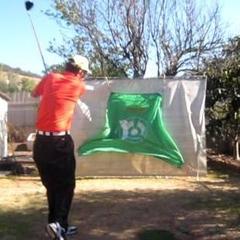
This may be more imagination than anything, but after reading some articles about where sweet spots are located on irons, I tried by hitting a one iron into an impact net.  I lined up with the club face very slightly closed and attempted to catch the ball towards the heel pocket as I had read about some body finding a lost one iron after 30 years that had a very well worn spot there as if it had been hit consistently.  I then put some impact tape on the iron to see the results. Although I was lined up thinking I would catch the ball towards the pocket, and after "feeling" a good solid hit, I examined the tape and noted that the impact was nearly centered on the club about 3 or 4 score lines up from the leading edge. Time and time again, whenever it felt good, the mark was in the same place even though I had "thought" I caught it towards the little "pocket" mentioned.  I am assuming that somewhere during my downswing, I had a slightly different plane than at address. In any event, it worked.  I then tried the one iron from about 20 yards back and was able to get it airborne and very straight into the net hitting the bulls eye often.  As for whether or not this will work on the course is unknown. If it does, it completely changes the way I think about lining up my irons. I am not talking about swinging open or closed when trying to shape a shot, but only the ball position at address closer to the heel and somehow or other, coming down hitting the ball in the center/bottom of the face. This might also explain why I have a "toe" hit sometimes when I addressed with the ball centered.

I don't know if I explained myself clearly or not, and it may only be a fluke. But I hope I discovered something that might actually work for me.  I was sure I would shank it, but I did not once!

"James"

:titleist: 913 D3 with Aldila RIP Phenom 60 4,2 Regular Shaft,  :touredge: Exotics XCG-7 Beta 3W with Matrix Red Tie Shaft:touredge: Exotics EX8 19 deg Hybrid w UST Mamiya Recoil F3 Shaft:touredge: Exotics EX9 28 deg Hybrid w UST Mamiya Recoil F3  shaft, / Bobby Jones Black 22 deg Hybrid:touredge: Exotics EXi 6 -PW  w UST Mamiya Recoil F2 Shaft, SW (56),GW (52),LW (60):touredge:  TGS),/ ODDYSEE Metal-X #7 customized putter (400G, cut down Mid Belly)

Awards, Achievements, and Accolades

Posted
Originally Posted by Hacker James

I had read about some body finding a lost one iron after 30 years that had a very well worn spot there as if it had been hit consistently.  I then put some impact tape on the iron to see the results.

If you had read the article carefully you would have noticed that this was an old blade of Hogan's with a wear mark towards the heel.

This is where the sweet spot was before perimeter weighted clubs. Nowadays it's closer to the middle, where you'd expect it to be.

  • Upvote 1

In the race of life, always back self-interest. At least you know it's trying.


Posted
Originally Posted by Shorty

If you had read the article carefully you would have noticed that this was an old blade of Hogan's with a wear mark towards the heel.

This is where the sweet spot was before perimeter weighted clubs. Nowadays it's closer to the middle, where you'd expect it to be.

In that case, it must be the same article and corroborates what I was trying to say. I was trying to hit near the heel but in reality something occurs during my downswing to bring it closer to the center, but if it is a "trigger" for me, then why not.  The one iron I am using is a Hogan, but it is a perimeter weighted Hogan Edge. For whatever reason, it seems to work (for now).  Thanks, I think that partially explains it.

"James"

:titleist: 913 D3 with Aldila RIP Phenom 60 4,2 Regular Shaft,  :touredge: Exotics XCG-7 Beta 3W with Matrix Red Tie Shaft:touredge: Exotics EX8 19 deg Hybrid w UST Mamiya Recoil F3 Shaft:touredge: Exotics EX9 28 deg Hybrid w UST Mamiya Recoil F3  shaft, / Bobby Jones Black 22 deg Hybrid:touredge: Exotics EXi 6 -PW  w UST Mamiya Recoil F2 Shaft, SW (56),GW (52),LW (60):touredge:  TGS),/ ODDYSEE Metal-X #7 customized putter (400G, cut down Mid Belly)

Awards, Achievements, and Accolades

Note: This thread is 4559 days old. We appreciate that you found this thread instead of starting a new one, but if you plan to post here please make sure it's still relevant. If not, please start a new topic. Thank you!

Create an account or sign in to comment

You need to be a member in order to leave a comment

Create an account

Sign up for a new account in our community. It's easy!

Register a new account

Sign in

Already have an account? Sign in here.

Sign In Now


  • Want to join this community?

    We'd love to have you!

    Sign Up
  • TST Partners

    PlayBetter
    Golfer's Journal
    ShotScope
    The Stack System
    FitForGolf
    FlightScope Mevo
    Direct: Mevo, Mevo+, and Pro Package.

    Coupon Codes (save 10-20%): "IACAS" for Mevo/Stack/FitForGolf, "IACASPLUS" for Mevo+/Pro Package, and "THESANDTRAP" for ShotScope. 15% off TourStriker (no code).
  • Posts

    • In driving a car you have all sorts of random or variable parts, though. Different speeds, corners, conditions, size of turns… even different cars and sizes, different traffic and laws (lights, signs, etc.). I don't think I've seen anyone doing "block practice" to practice the same exact turn 100 times, then trying it in the real world.
    • IMHO, block practice is good. Any new motor pattern or a 'move' has to be committed to muscle memory and be reproducable at command without conscious thought as the final goal. I don't see how this is that much different than learning how to drive a car, or let's say how to handle the steering for example. One must do it enough times and then also do it in different situations to commit to all layers of brain - judgment of demand, decision making, judgment of response and finally execution. Unless each layer is familiar of each of their role in the specific motor move, it is not truly learned and you will simply fall back to the original pattern. I think the random practice is simply committing the learned pattern to different scenarios or intervals of time to replicate in the real world (actual rounds). It breeds further familiarity learned from block practice. Steer the car a hundred times to learn the move (block) and then drive the car all over town to make it real world (random) to a level of maturity. I don't see how block and random have to be in conflict with each other.  
    • Yea, I think the first thing is to define block, variable, and random practice with regards to golf.  The easiest one might be in practicing distance control for putting. Block practice would be just hitting 50 putts from 5 feet, then 50 putts from 10 ft then 50 putts from 15 ft. While random practice would having a different distance putt for every putt.  In terms of learning a new motor pattern, like let's say you want to make sure the clubhead goes outside the hands in the backswing. I am not sure how to structure random practice. Maybe block practice is just making the same 100 movements over and over again. I don't get how a random practice is structured for something like learning a new motor pattern for the golf swing.  Like, if a NFL QB needs to work on their throw. They want to get the ball higher above the shoulder. How would random practice be structured? Would they just need someone there to say, yes or no for feedback? That way the QB can go through an assortment of passing drills and throws trying to get the wright throwing motion?  For me, how do you structure the feedback and be time effective. Let's say you want to work on the club path in the backswing. You go out to the course to get some random practice. Do you need to set up the camera at each spot, check after each shot to make it random?  I know that feedback is also a HUGE part of learning. I could say, I went to the golf course and worked on my swing. If I made 40 golf swings on the course, what if none of them were good reps because I couldn't get any feedback? What if I regressed? 
    • I found it odd that both Drs. (Raymond Prior and Greg Rose) in their separate videos gave the same exact math problem (23 x 12), and both made the point of comparing block practice to solving the same exact math problem (23 x 12) over and over again. But I've made the point that when you are learning your multiplication tables… you do a bunch of similar multiplications over and over again. You do 7 x 8, then 9 x 4, then 3 x 5, then 2 x 6, and so on. So, I think when golf instructors talk about block practice, they're really not understanding what it actually is, and they're assuming that someone trying to kinda do the same thing is block practice, but when Dr. Raymond Prior said on my podcast that what I was describing was variable practice… then… well, that changes things. It changes the results of everything you've heard about how "block" practice is bad (or ineffective).
    • Day 121 12-11 Practice session this morning. Slowing the swing down. 3/4 swings, Getting to lead side better, trying to feel more in sync with swing. Hit foam balls. Good session overall. 
×
×
  • Create New...

Important Information

Welcome to TST! Signing up is free, and you'll see fewer ads and can talk with fellow golf enthusiasts! By using TST, you agree to our Terms of Use, our Privacy Policy, and our Guidelines.