

Jump to content
Check out the Spin Axis Podcast! ×
  • entries
    57
  • comments
    772
  • views
    53,347

Some Compensations Don't Need Attention


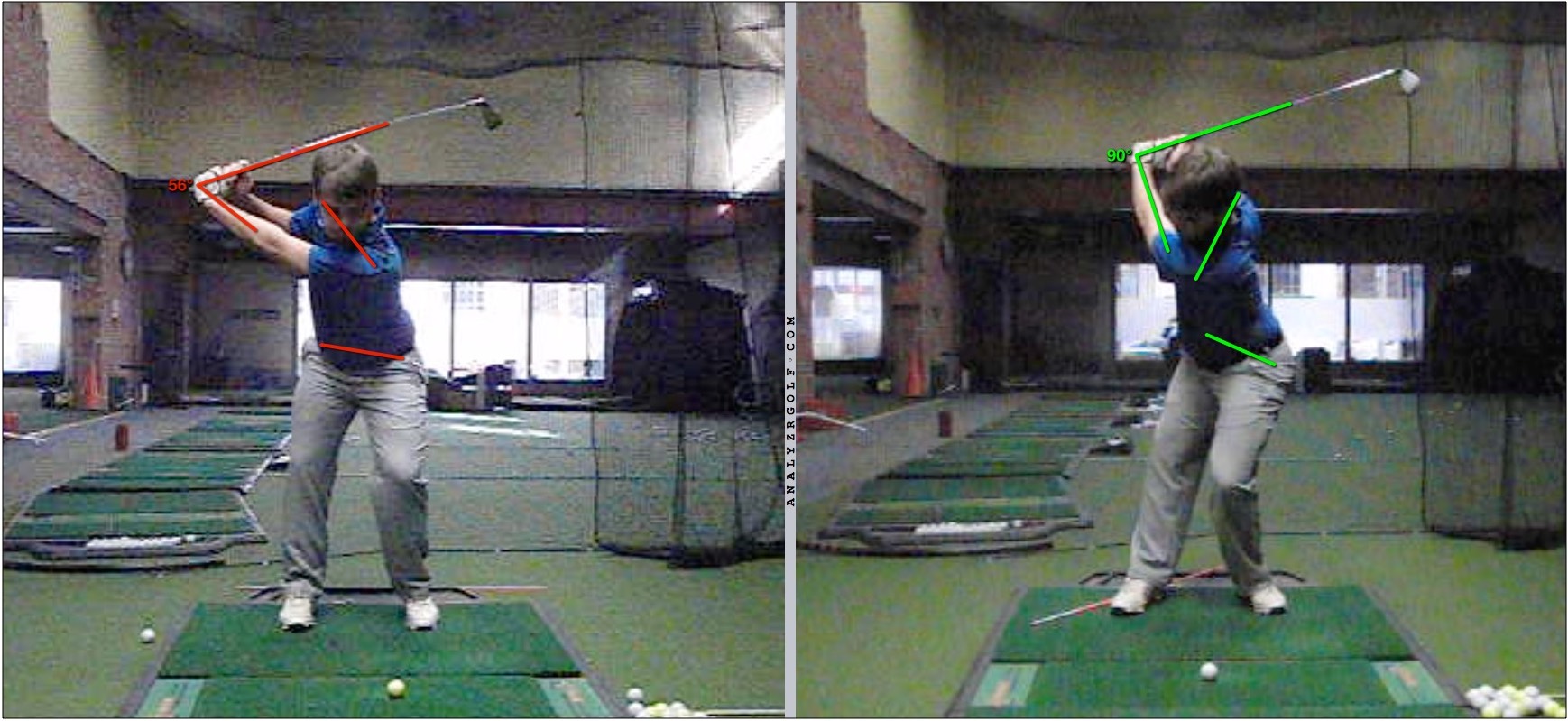
This golfer's wrists collapsed like crazy at the top of the backswing. They don't anymore. He also had trouble hitting out at the golf ball at all.
05_A4_FO.thumb.jpeg.0fc4c76e25484e5dad55

03_Backswing_Turn.thumb.jpeg.005124e1fca

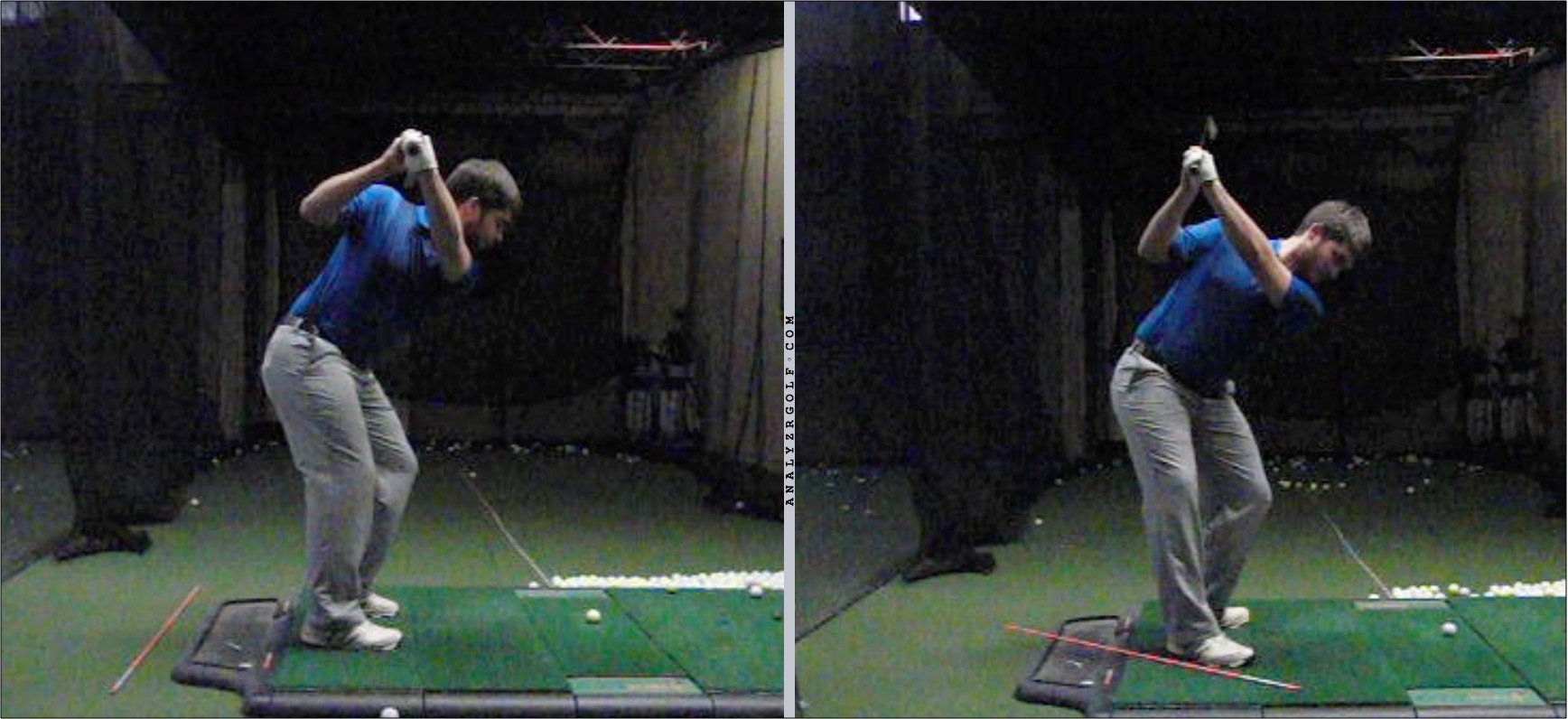
The fix? A bit of a two-in-one solution: TURN MORE.

04_Drill.thumb.jpeg.61c31251dad71255d7c0

The golfer was bending the wrists so much to try to feel that the clubhead was getting near parallel somewhere. Now, he doesn't have to, and yet his arms have gained not only more depth, but more distance and can thus generate more speed as well.

I'll often say to people that almost everyone can name the 17 things they don't like about their golf swing.

The trick is prioritizing the most important one, and realizing that often the other things are compensations for that high-priority item, not separate "bad" things in need of fixing.

P.S. Yes, the golfer is exaggerating a bit more than I might like in the first "after" photo. Hips have gone forward more than I might want to see, turn is a bit longer than I might want, etc. But I'll take that over the "before" particularly as he knows he's doing it slow and exaggerating it.

  • Upvote 1

1 Comment


Recommended Comments

JonMA1

Posted

It still amazes me how many good things come as a result of getting weight forward on the downswing. Different than your example above, but I believe the same idea.

It's hard to have a good inside out path if my hips don't move forward. It's hard to get the hips forward if my weight is too much on my trail leg when I start the downswing. By improving my weight distribution at A4, the other things improve a little bit as a result. At least that's my theory and why I've starting working on it.

Create an account or sign in to comment

You need to be a member in order to leave a comment

Create an account

Sign up for a new account in our community. It's easy!

Register a new account

Sign in

Already have an account? Sign in here.

Sign In Now


  • Want to join this community?

    We'd love to have you!

    Sign Up
  • Blog Entries

  • Posts

    • +10 46 for nine holes Struggle bus off the tee. No penalties either. I had to hit a punch shot like 4 times on my approach shots. Then it was short game woes. My body just doesn’t want to pivot and it’s causing a lot of inconsistencies. That and I two putted 8 out of 9 greens. Full swing irons were decent when I had a shot at it. 
    • It was worse than that.  Under 10 course handicap I think was NDB, but 10-19 CH had a maximum score, and 20-29 had a higher one (by one).  Might have been 7 and 8, I'm going from memory here.  When my handicap was low 20s / high teens, I had to look up  my course handicap every time I had a bad hole and adjust before I posted the number.  Now there's maybe one hole per course where that might be an issue, and I have the option to enter hole-by-hole in the GHIN app anyway if I have any doubts.   I remember reading a lot of Dean Knuth's writing 15-20 years ago, when I was starting in golf.  I liked the history of the (old?) handicapping system.  I really like the changes WHS brings with par.  I suppose I'm sorry he doesn't seem to like that change, I thought it solved a problem that had been irking me. 
    • Wordle 1,811 4/6 ⬜🟨⬜⬜⬜ ⬜🟩🟨⬜⬜ 🟩🟩🟩🟩⬜ 🟩🟩🟩🟩🟩
    • Couple of things. In the UK they play a lot of stableford competitions. 2 points for a net par, 1 for a bogey, 3 for a birdie, 4 for an eagle, 0 for a double bogey or worse. Playing to your handicap typically means getting 36 points, being 18 x 2 points. If your course rating is a long way different from par, then playing to your handicap would mean getting 32 points or 40 points or some such. I wouldn't be at all surprised if that input from the R&A is the reason for the CR-Par adjustment, which brings it to 36 points is playing to your handicap. A round of net pars really should be playing to your handicap. Now it is. Yay. I would think the people most likely to be upset about the CR-Par adjustment would be 6 or 7 indexes whose course is par 72, with a 74/140 rating. 6.5 x 140/113 + 74 - 72 = 10. So the "single figure" golfer who has probably defined himself that way for a long time is now a 10 and getting double digit strokes. Oof. I must admit I'm a 0.0 right now (sure makes the math easy) and if I play Bethpage Black from the blues, suddenly I'm a 7. That takes a little bit of getting used to. It also means I do have to pay attention to the stroke indices to be sure of whether I'm making the net double bogey adjustment properly.  I do think it's much less likely that NDB is applied properly vs the old system where it was max double bogey or max 7 depending on handicap (I think anyway - I know it was max double bogey at my handicap level - I didn't much care about where it changed or what it changed to). NDB is clearly better, but it does mean people either have to adjust it themselves accurately (questionable) or input their hole by hole scores (also questionable). I do it, because I care about it (and don't tend to make too many scores worse than double and also rarely play courses where I'm giving strokes back to the course and would therefore have max bogey on some holes). I'm sure there are many who don't and will just guess or assume. Under the old system, if I was playing a scratch tournament (which is most of my golf), I didn't care what my course handicap or stroke allocations were. They didn't affect my posted scores at all. Now they do (although the MGA and LIGA post all scores at their events themselves directly - something I am very happy about). That is a complication under the new system - one I think is worth it given the benefits, but a complication all the same.
    • Wordle 1,811 4/6 ⬜🟩🟨⬜⬜ 🟩🟩⬜⬜⬜ 🟩🟩🟩🟩⬜ 🟩🟩🟩🟩🟩
×
×
  • Create New...

Important Information

Welcome to TST! Signing up is free, and you'll see fewer ads and can talk with fellow golf enthusiasts! By using TST, you agree to our Terms of Use, our Privacy Policy, and our Guidelines.