Jump to content
Check out the Spin Axis Podcast! ×
Note: This thread is 1070 days old. We appreciate that you found this thread instead of starting a new one, but if you plan to post here please make sure it's still relevant. If not, please start a new topic. Thank you!

Recommended Posts

Posted

Something a high handicapper should work on along with this is the shoulder movement. The over the top move is often a result of the shoulders turning over and around the ball. Combine the hip slide and OTT move and you've got a destructive swing.

Here's a link to Golf Digest which has analysed 180 000 swings to determine the biggest culprit to the slice: http://www.golfdigest.com/instructio...ssteveatherton

The good thing about ingraining this move into the work is that it is based on the same movement, which will make the entire body work the same way. The basic idea is that the right shoulder work down and not out from the top. You'll want to get to a position where the left shoulder is higher than the right, like the left hip is higher than the right. Looking at the pictures you can see that the hips and shoulders angle at a pretty similar angle.

An important detail is to keep the head from moving laterally too much, preferably as little as possible, but not conciously trying to keep it dead still. The swing is a dynamic and moving motion, the head must be allowed to be alive, but not follow the rest of the body.

Try getting the sensation of the body between the head and the feet moving out towards the target from the top of the backswing. It will feel very strange, but it's what this thread is about. The hips must lead for this to work. If the shoulders start moving forward, the head will follow. The hips is the centre of the body which can move forward, shifting the weight and pulling along with it legs and shoulders. The shoulders don't move forward, as that would be impossible without moving the head the same way. The head is an important detail because it is linked to the shoulders. Wherever your head moves, the shoulders also move. This effectively move your body position relative to the ball position, which most of us have made sure is in the right place. The shoulders simply create an angle with the right one dropping down.

Saying that the shoulder just rotate from the top is wrong and won't do any good. The shoulders must work up and down to get into the right position. In fact, rotating from the top is the move of a slicer. The right shoulder must move down from the inside of the ball, then rotate through the ball, but still moving up. If you start by rotating from the top, you'll be open long before hitting the ball, which will send the ball to the right, or open the clubface so much you'll hit a big slice. The shoulders rotate 90º from address to the top, from there it must rotate 90-100º before impact and then rotate through to the finish, the last 90º.

Ogio Grom | Callaway X Hot Pro | Callaway X-Utility 3i | Mizuno MX-700 23º | Titleist Vokey SM 52.08, 58.12 | Mizuno MX-700 15º | Titleist 910 D2 9,5º | Scotty Cameron Newport 2 | Titleist Pro V1x and Taylormade Penta | Leupold GX-1

Awards, Achievements, and Accolades

  • Administrator
Posted
Something a high handicapper should work on along with this is the shoulder movement. The over the top move is often a result of the shoulders turning over and around the ball. Combine the hip slide and OTT move and you've got a destructive swing.

I think that misses the point, and at 16.5, you are a higher handicapper (no offense intended, Zeph).

If you slide the hips rather than rotate them, that will help to keep the shoulders back and squarer to the target line near impact. Now, the kernel of truth in what you said is that if you can try to keep your shoulders closed through impact (they probably won't actually be closed, but they'll FEEL closed), you'll probably improve your hip slide too or at least limit your hip rotation to a better/more acceptable level.

He talks about the key move there being to drop the right shoulder. How do you get the right shoulder to drop? By pushing your hips forward and keeping your head relatively centered.

I don't particularly like the "drop the right shoulder" way of thinking because in my experience it can lead a golfer to hitting fat or thin shots or moving their head (backwards) and ending up with a poor weight shift. No doubt in a relatively one-plane swing my shoulder will drop a bit, but it's because my hips have gone forward. I've yet to meet someone who can think of their right shoulder dropping in order to push their hips forward towards the target. Perhaps you're one of them, Zeph.

Erik J. Barzeski —  I knock a ball. It goes in a gopher hole. 🏌🏼‍♂️
Director of Instruction Golf Evolution • Owner, The Sand Trap .com • AuthorLowest Score Wins
Golf Digest "Best Young Teachers in America" 2016-17 & "Best in State" 2017-20 • WNY Section PGA Teacher of the Year 2019 :edel: :true_linkswear:

Check Out: New Topics | TST Blog | Golf Terms | Instructional Content | Analyzr | LSW | Instructional Droplets

Awards, Achievements, and Accolades

Posted
The over the top move is often a result of the shoulders turning over and around the ball. Combine the hip slide and OTT move and you've got a destructive swing.

This is almost impossible to do. People who slide "too far" have problems with hooks. They stay back too long and come way inside of the ball because their shoulders are closed by the time the club gets to impact. Tom Lehman is a great example of that. He fought hooks because he slid his lower body to the point where both of his knees stayed bent through his whole swing.

Like I said earlier, where the hips go, so go the shoulders. If you slide (push your left hip toward the target too long) then your shoulders will also do the same. Slicers have a problem of their left hip pulling away from the ball, and then their lead shoulder also pulls away from the ball.

Equipment, Setup, Finish, Balance, and Relax. All equal in importance and all dependent on each other. They are the cornerstones of a good golf swing.


Posted
I think that misses the point, and at 16.5, you are a higher handicapper (no offense intended, Zeph).

None taken, I know I'm a high handicapper, don't recall saying I wasn't, and I am working on these things myself. Which is why I'm discussing it, to get a better understanding. If I have to be wrong a couple of times before I get it right then so be it, at least I'm going in the right direction. The best way to learn something is by learning it to someone else.

Now, the kernel of truth in what you said is that if you can try to keep your shoulders closed through impact (they probably won't actually be closed, but they'll FEEL closed), you'll probably improve your hip slide too or at least limit your hip rotation to a better/more acceptable level.

I'm aware of the relationship between the hips and shoulders, perhaps dropping the right shoulder is the wrong way to go about it, I haven't gotten a chance to work much on it as the season is over here now. Sliding the hips will get the right shoulder on the right plane. The problem with a OTT swing is that the shoulders are turning by themselves outwards. Telling someone whos hit thousands of balls to stop using the shoulders and just let the hips do the work might not work, as there are muscles that will try to turn the shoulders all the time. That is maybe why they suggest you practice dropping the shoulder conciously, so you make sure you don't keep turning it out.

Turning and sliding at the same time should be possible I'd say. When you come OTT, you usually turn the shoulders from the top, which is possible even if you slide the hips at the same time. I'm not saying that you slide the hips by dropping the shoulder, but that they work together as a unit, and that you'll have to be concious about that right shoulder if you have OTT problems. If you can stop doing the OTT move and let the hips do all the work, then great, but it will take time to learn the muscles not to do the wrong move. If you don't get into the slot right away from the top, you'll cut across the ball no matter what you do. Spinning the hips open too fast will also throw the shoulders around and pull the club and ball to the inside.

Ogio Grom | Callaway X Hot Pro | Callaway X-Utility 3i | Mizuno MX-700 23º | Titleist Vokey SM 52.08, 58.12 | Mizuno MX-700 15º | Titleist 910 D2 9,5º | Scotty Cameron Newport 2 | Titleist Pro V1x and Taylormade Penta | Leupold GX-1

Awards, Achievements, and Accolades

Posted
McDog-Golfie said,

As a newbie to the forum .. and to this crazy 'game' of golf - I just wanted to clarify:

>> golf-playing (and beer-drinking) partner But seriously, my buddy has helped me out TREMENDOUSLY and HUGELY in getting going with golf, and is always coaching and encouraging me - on the range and on the course - including trying to get me to "get" the concept of the hip slide. And as a beginner (just started this Spring) when I get my backswing quieted down and my forward weight shift closer to correct .. I can really see the difference! Ball takes off and flies straight and carries some distance, too! And THANKS!!! iacas/erik for putting up all that great and helpful info!!!

Posted
Thanks for the info Iacas. I constantly need a reminder on this topic, can't seem to make it stick. I get up on my back toe much to quickly, results in hook-city for me.

Posted
As a final comment for anyone who cares about such matters, I was taught in the beginning to be a left hand dominant swinger. I learned to hit thousands of balls with no right hand on the club. I understand the "Pull" mentality all too well since it served me wonderfully for so many years. But once you start the process of seeking out TRUTH over advice, you will begin to see that the left side is not dominant, nor is the right side. They are part of the apparatus that swings the club. Just like one would not say the left rope controls the swing on a swingset, while the right rope is trailing. Both of them together make up the swing, and both of them move syncronously.

Great thread iacas. And I really like this comment Ringer. I catch and throw right handed but golf and bat left. It's always bothered me a little that I was right hand dominant and pulling the club. One lesson I had I was told to press my back knee forward at the setup. Now I know why.

Ping I15 Driver, Ping i20 3 Wood & i20 Hybrid 3 Iron
Mizuno MP60 4-PW Irons
Vokey Spin Milled 52, 56 & 60 Degree Wedges
Odyssey Black Putter


Posted
Here's an interesting, albeit somewhat confusing article:

http://www.golftipsmag.com/instructi.../hip-work.html

One really confusing part is:

*Unlock Your Hips*

"In a good downswing, there’s a “hip switch,” where the weight transfers from the rear hip to the front hip, setting it up as the rotational center for the release. This can only occur if you “unlock” the hips at address so that your abdomen is retracted upward and inward, causing your backside to protrude so it acts as a counterweight to keep you in balance. Maintaining your address posture while you swing prevents your lower spine from thrusting toward the ball and ruining your hip whip."

Is this "retraction" something that you actively do at address? What is he talking about exactly? Anyone have a clue?

[ Equipment ]
R11 9° (Lowered to 8.5°) UST Proforce VTS 7x tipped 1" | 906F2 15° and 18° | 585H 21° | Mizuno MP-67 +1 length TT DG X100 | Vokey 52° Oil Can, Cleveland CG10 2-dot 56° and 60° | TM Rossa Corza Ghost 35.5" | Srixon Z Star XV | Size 14 Footjoy Green Joys | Tour Striker Pro 5, 7, 56 | Swingwing


Posted
Thought about this at the range today and tried it out. At first, it kinda messed me up because I wasn't turning the hips and only focusing on sliding. What did really work for me was imagining I was sliding into a wall... per say. I heard the phrase before, but it really clicked today. Basically the downswing starts with sliding the left hip forward into an imaginary wall and the right hip comes around with both hips ending up at the wall. I also imagined the left arm was hitting this wall.

Now, I just need to get those arms turning over properly and I'll have a good swing on my hands.

Posted
Great thread iacas. And I really like this comment Ringer. I catch and throw right handed but golf and bat left. It's always bothered me a little that I was right hand dominant and pulling the club. One lesson

Right knee preset is for building a firm right side and preventing swaying (instead of turning)

Cheers, M

Posted
This s awesome info. I wish I would have found this site years ago!

G10 9.0* fujikura stiff
Speedline 3 wood 13*
A4 OS 19* hybrid
S2 with Project X 5.5 steel shafts
CG 10 54* Studio Style 1.5


Posted
Great video, thanks. Makes it much easier to follow the descriptions.

Now if he could just learn how to release the club with a neutral grip, he'd have a great swing.

Equipment, Setup, Finish, Balance, and Relax. All equal in importance and all dependent on each other. They are the cornerstones of a good golf swing.


Posted
Now if he could just learn how to release the club with a neutral grip, he'd have a great swing.

I am pretty sure he is ok at golf.

Brian


Posted
As a newbie to the forum .. and to this crazy 'game' of golf - I just wanted to clarify:

Good to see you in the sandtrap Surfdude, and thanks for hitting the range with me today after the surf portion of the day. With a bit of midweek practice we might just reclaim our swings by the weekend.

One you have the hip slide down, golf is full of interesting sequences, eg. Surf>Golf>Beer Surf>Beer>Golf Golf>Surf>Beer but not Golf>Beer>Surf -- doesn't work particularly well.

........................................
McGolf-Doggie's stand bag & new and used club emporium:
Putter :ping: 1/2Craz-e | Irons :TaylorMade: RAC MB, 4i-PW (DG S300) |Wedges :Cleveland: SW&LW 56*DSG+RTG; 60*/4* DSG+RTG |Woods :Cobra: S1 5W; Adams TIght Lies 3W |Driver :TaylorMade: Burner 9.5 Fujikura Reax S | Maxfli Practice


Posted
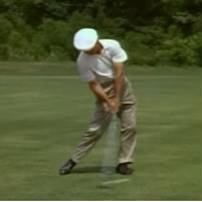
Nick Faldo in his prime:

You could even make a drill out of it by stabbing a shaft into the ground as to the yellow line in this picture, after you strike the ball see where your lead leg is in relationship to the shaft, or even go as far as to video tape your swing with the shaft there as a reference point

Driver Tit 907D2 9.5 aldila spec grid 67s
HybidTit 585H 19* s flex
IronsTit 775cb 3-pw
WedgesTit vokey 52* 56* 60*
Putter Rife Barbados 35" winn mid pistol gripGolfballBridgestone B330-s/taylormade tp black/titleist prov1x

Note: This thread is 1070 days old. We appreciate that you found this thread instead of starting a new one, but if you plan to post here please make sure it's still relevant. If not, please start a new topic. Thank you!
Guest
This topic is now closed to further replies.


  • Want to join this community?

    We'd love to have you!

    Sign Up
  • TST Partners

    PlayBetter
    Golfer's Journal
    ShotScope
    The Stack System
    FitForGolf
    FlightScope Mevo
    Direct: Mevo, Mevo+, and Pro Package.

    Coupon Codes (save 10-20%): "IACAS" for Mevo/Stack/FitForGolf, "IACASPLUS" for Mevo+/Pro Package, and "THESANDTRAP" for ShotScope. 15% off TourStriker (no code).
  • Posts

    • Day 470 - 2026-01-13 Got some work in while some players were using the sim, so I had to stick around. 🙂 Good thing too, since… I hadn't yet practiced today until about 6:45 tonight. 😛 
    • That's not quite the same thing as what some people messaged me today.
    • Day 152 1-12 More reps bowing wrists in downswing. Still pausing at the top. Making sure to get to lead side and getting the ball to go left. Slow progress is better than no progress.  
    • Yea, if I were to make a post arguing against the heat map concept, citing some recent robot testing would be my first point. The heat map concept is what I find interesting, more on that below. The robot testing I have looked at, including the one you linked, do discreet point testing then provide that discrete data in various forms. Which as you said is old as the hills, if you know of any other heat map concept type testing, I would be interested in links to that though! No, and I did say in my first post "if this heat map data is valid and reliable" meaning I have my reservations as well. Heck beyond reservations. I have some fairly strong suspicions there are flaws. But all I have are hunches and guesses, if anyone has data to share, I would be interested to see it.  My background is I quit golfing about 9 years ago and have been toying with the idea of returning. So far that has been limited to a dozen range sessions in late Summer through Fall when the range closed. Then primarily hitting foam balls indoors using a swing speed monitor as feedback. Between the range closing and the snow flying I did buy an R10 and hit a few balls into a backyard net. The heat map concept is a graphical representation of efficiency (smash factor) loss mapped onto the face of the club. As I understand it to make the representation agnostic to swing speed or other golfer specific swing characteristics. It is more a graphical tool not a data tool. The areas are labeled numerically in discrete 1% increments while the raw data is changing at ~0.0017%/mm and these changes are represented as subtle changes in color across those discrete areas. The only data we care about in terms of the heat map is the 1.3 to 1.24 SF loss and where was the strike location on the face - 16mm heal and 5mm low. From the video the SF loss is 4.6% looking up 16mm heal and 5mm low on the heat map it is on the edge of where the map changes from 3% loss to 4%. For that data point in the video, 16mm heal, 5mm low, 71.3 mph swing speed (reference was 71.4 mph), the distance loss was 7.2% or 9 yards, 125 reference distance down to 116. However, distance loss is not part of a heat map discussion. Distance loss will be specific to the golfers swing characteristics not the club. What I was trying to convey was that I do not have enough information to determine good or bad. Are the two systems referencing strike location the same? How accurate are the two systems in measuring even if they are referencing from the same location? What variation might have been introduced by the club delivery on the shot I picked vs the reference set of shots? However, based on the data I do have and making some assumptions and guesses the results seem ok, within reason, a good place to start from and possibly refine. I do not see what is wrong with 70mph 7 iron, although that is one of my other areas of questioning. The title of the video has slow swing speed in all caps, and it seems like the videos I watch define 7i slow, medium, and fast as 70, 80, and 90. The whole question of mid iron swing speed and the implications for a players game and equipment choices is of interest to me as (according to my swing speed meter) over my ~decade break I lost 30mph swing speed on mine.
    • Maxfli, Maltby, Golfworks, all under the Dicks/Golf Galaxy umbrella... it's all a bit confounding. Looking at the pictures, they all look very, very similar in their design. I suspect they're the same club, manufactured in the same factory in China, just with different badging.  The whacky pricing structure has soured me, so I'll just cool my heels a bit. The new Mizuno's will be available to test very soon. I'm in no rush.  
×
×
  • Create New...

Important Information

Welcome to TST! Signing up is free, and you'll see fewer ads and can talk with fellow golf enthusiasts! By using TST, you agree to our Terms of Use, our Privacy Policy, and our Guidelines.