
Leaderboard



Popular Content
Showing content with the highest reputation since 03/08/2026 in all areas
-
Leaving to go south on Saturday, have Tuesday Master's practice round tickets. Going to play some golf while waiting for Tuesday to arrive. Pine Lakes CC - Charlotte NC (possibly) Fox Run CC - Simpsonville SC Olde Eight Golf Club (formerly Links at Stoney Point) - Greenwood SC4 points
-
Seriously, hire a freaking driver, man.4 points
-
I was on Golf Digest's Golf IQ podcast with Sam Weinman talking about being a "golf dad." https://www.golfdigest.com/story/5-golf-dads-advice I followed: Ian Poulter Mike Thomas Johnson Wagner Kevin Van Valkenburg Apparently the series was only five parts long, as they wrote up a summary article on it. Golf Dad Part 5: Erik Barzeski on how to switch between father and instructor Podcast Episode · Golf IQ · March 2 · 35m Golf Dad Part 5: Erik Barzeski on how to switch between father and instructor — Golf IQ Erik Barzeski, Director of Instruction at Golf Evolution, is the father of a golf pro and an author, but also has the perspective of someone who works with juniors. The ability to switch between wearing those different...4 points
-
The first post is here: Do you have an overly long backswing that ruins sequencing and leads to poor shots? In nearly 20 years of teaching, I've found 5 common faults. You don't have to swing like Jon Rahm, but a shorter swing will probably help you #PlayBetter golf. Which is your fatal flaw? #1 - Trail Elbow Bend Average golfers ♥️ bending their trail elbows. It can feel powerful! Tour players bend their trail elbows MUCH less. A wider trail elbow creates a longer hand path and preserves structure. It also forces more chest turn; not everything longer is bad! Overly bending your trail elbow can wreak havoc on your swing. It pulls your arms across/beside your body. It requires more time to get the elbow bend "out," ruining your sequencing. The lead arm often bends and low point control is destroyed. The misconception is that it will create more speed, but that's often the opposite of what happens. Golfers often feel they swing "easier" but FASTER with wider trail elbows. Want to play better golf with a shorter backswing? Don't bend your elbow so much. #2 - Hip (Pelvis) Turn I see this all the time: a golfer's hips are only 5-10° open at impact, but he turns them back 60°+ in the backswing. Unless your father is The Flash, your hips are probably not getting 40° open at impact from there! That's more rotation than Rory! Golfers who over-rotate their pelvis often over-turn everything - trail thigh/knee, chest/shoulders, etc. They have more work to do in the same ~0.3 seconds as a Tour player who turns back ~40° and turns through to impact 40° or so. Want to shorten the pelvis turn a bit? Learn to internally rotate into the trail hip, externally rotate away from the lead hip, and do "less" with your knees (extending and flexing) in the backswing. Learn some separation between chest and pelvis. #3 - Rolled Inside and Lifted Up Amateurs love to send the club (and their arms) around them. You see the red golfer here all the time at your local range. The problem? Your arms mostly take the club UP, not around. Going around creates no height until you have to hoist the club up in the air because you're halfway through your backswing and the club is waist high and three feet behind your butt! 😄 Learn to use your arms properly. Arms = up/down, body = around. Most golfers learn how little their arms really have to do in the backswing. The picture here is all you've gotta do (but maybe with a properly sized club!). #4 - Wide Takeaway Width is good, no? Yes, if you're wide at the right time and in the right spots. Golfers seeking width often don't hinge the club much early in the backswing… forcing them to hinge it late. Hinging the club late puts a lot of momentum into the club, wrists, and elbow just before we need to make a hairpin turn in transition and go the other direction at the start of the downswing. When you're driving into a hairpin curve, you go into it slowly and accelerate out of it. Waiting to hinge is like coasting down the straightaway and accelerating into the hairpin. Your car ends up off the road, and your golf ball off the course. Give hinging at a faster rate (earlier) then coasting to the top a try. You'll be able to accelerate out of the hairpin without the momentum of the arms and club pulling in the wrong direction. #5 - Sway and Tilt Some sway is good but sometimes I see a golfer who just… keeps… swaying… Their chest leans forward a bit for balance, resulting in a whole lotta lean. The green line below is the GEARS "virtual spine." Pros sway a bit, but stay ~90°. This sway often combines with the extra pelvis turn because this golfer is not putting ANY limits on what the "middle of them" (their pelvis) is doing in the backswing. These golfers spend a lot of energy just to get back to neutral! The best players begin pushing forward EARLY in the backswing. Often before the club gets much past their trail foot! Pushing forward (softly) first stops your backward sway and then begins to get your body moving toward the target. Push softly, but early!
 4 points
 -
Nor Phil. Full TV schedule including the times on Prime. 2026 Masters: How to watch, scores, tee times, TV times - PGA TOUR The first major championship of the season tees off from Augusta National Golf Club on Thursday, and this year, there are more streaming and viewing options thr3 points
-
To be fair, almost all the kids and almost all the parents have been great to be around.3 points
-
Cam Young hit those incredible shots.3 points
-
Better late than never. I got The Stack System over 2 years ago. Problems with ruptured tendon and bone-on-bone knee stopped me from using it. Foot was a year to full recovery. Had the knee done in January. This weekend was first full swings in quite a while, With spring here (at least according to the calendar) I’m finally going to do the program. It’s 32 degrees with flurries tonight so I’m not sure exactly when I will start but should be soon.2 points
-
I’m going out on a limb and say Tiger is not going to win the Masters this year. Just a hunch.2 points
-
Wow, a new season is upon us. At this stage I have about 36 days of referee work scheduled, and I know I'll pick up a few more later in the season. I have a couple of highlights, including two USGA qualifiers. First is the US Senior Open at the Homestead, VA, second is for the US Senior Women's Open and Senior Amateur. In just about two weeks I'll be co-chair for a college women's championship near Baltimore, a bit of a step up in responsibility. The other highlight will be the Kenridge Invitational in Charlottesville, VA. That one has had the same four officials for a few years, and I was specifically invited to take the spot of a retiring referee. Apparently I'm doing something right. We had a difficult situation this past week at a junior event. Two players approached me while walking off the 17th green. They said they had noticed another player marking, lifting, and aligning his ball while it was on the fringe of the green, NOT on the green. That's a 1-stroke penalty (Rule 9.4 for anyone who cares), and I told them to talk to the Player in order to make sure the score was recorded correctly. Apparently that went fine, the Player realized he'd made a mistake, and accepted the Penalty gracefully. His father, on the other hand, became irate, cursing at the two Players, cursing at the guy in charge of the competition, even cursing at the fathers of the two boys. Not much anyone could to except to let him rant, but its sad to see.2 points
-
Oy. I get what Brentley is saying, but if this is your pre-shot routine… then you're not ready to play high-level tournament golf. It's unfair to your fellow competitors (particularly those in the group with you, and those in the group behind you). P.S. Watch the video. She does eventually hit the shot. After 1:17.2 points
-
Yep. Well at least the bad umpires really. I think overturns are at 50/50 right now, with catchers being the most accurate. I don't think they could go all the way without dealing with an umpire strike. They are a union after all. I get that, and the part of the gaming the system is out now. I have mixed feelings about it. In the end, with how bad some umpires have gotten, it's really their own fault for not living up to a better standard.2 points
-
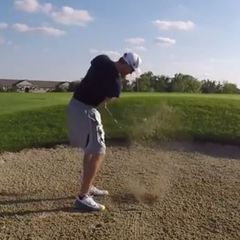
Little bit of work in the back yard today. I was going to submit a couple of videos for a follow up but I made a complete dogs breakfast of positioning the camera so that will have to wait. First swing is a middle distance pitch. Trying not to slide my hips too far forward and keep right arm straighter. I think it’s a hair better but still to be worked on. Second swing is a full shot where I tried to really exaggerate lifting my arms. I swung too far so I think I’m losing it towards the end of the backswing, but it looks less flippy to me. I’m also hitting those plastic balls with holes in so not caring about outcome at all.2 points
-
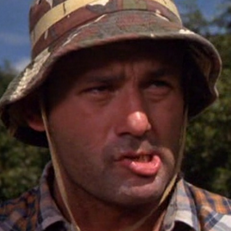
Because he shaves his head now, that’s why. He looks like Dr Evil now.2 points
-
Now we know.
2 points
-
Day 112: this is was grit day. Not feeling great and a rough week so far. Did some mirror work, even though I didn’t really feel like it.2 points
-
2 points
-
Awesome. We were originally going to play Quail Ridge but ended up moving some things around and are going to do the following when we go in May Day 1 Tobacco Road Day 2 Southern Pines and Pine Needles Day 3 Tot Hill Farm There are a couple good course vlog/matches on YouTube at Southern Pines, it looks awesome.2 points
-
I got two trips lined up this year. First, Pinehurst next month. Qual Ridge, Mid Pins, Southern Pines 😁, Mid South, Talamore. I am looking forward to playing Southern Pines since it got redone. Second, a trip to eastern Wisconsin in early August. Whistling Straights, Blackwolf Run, Erin Hills.2 points
-
Got my first eagle of the year as well, our 17th hole, holed out from 105 Yards.2 points
-
I have played PGA West, at least one or two courses in there, but I am not sure if I've played any of the courses used to host the Hope. I played a course that I think both isn't PGA West and is host to the Hope a few years ago, possibly at a TST outing, but I'm not sure if I'm thinking of the right one. I have played Rancho Park plenty of times (exactly half of my sub-80 rounds were there!) and Wilson/Harding. Rancho Park might be my favorite golf course among those I've played more than a half dozen times. Hopefully I'll get a chance to play TPC Scottsdale, maybe this August or September, and at some point I think there was a PGA Tour event in Las Vegas, I should get up there and play those course(s).2 points
-
Hahaha. Love how you put rancho park and wilson/harding in there! Not exactly the same kind of challenge as some of the other courses on your list! Though the plaque on 18 at Rancho Park about Palmer's 18 there during an LA Open is hilarious.2 points
-
These are the courses that I remember, but there may be others that I’m not remembering at the moment. I broke 100 atOakland Hills one time, but what I shot otherwise will be taken to the grave with me. Country Club of the North - Several LPGA tournaments NCR Country Club South Course - 51st PGA, 41st US Women’s Open, 05 US Senior Open (attended) TPC Michigan - Ford Senior Players Championship Valhalla - 24, 14, 2000, and 96 PGA Championships, 11, and 04 Senior PGA Championships, 08 Ryder Cup Oakland Hills - 08 PGA Championship, 04 Ryder Cup, 96, 85, 61 and other US Opens TPC Sawgrass - The Players Championship2 points
-
Followed by the longest drive on 18 in the shotlink era. That is a tough shot and he stood up there and did it. Fair play to him.2 points
-
Over the past 15 years, the winning score has ranged from -10 to -20. Mostly around -13. Here is Thursday and Friday weather. Saturday and Sunday weather. I think the course will play soft. Plenty of sky cover, lots of rain on Thursday. Fairways and greens will probably stay soft throughout the week. In terms of tee times, I think Thursday morning and Friday afternoon have the biggest advantage. I bolded the big group of each set. Most beneficial with the weather Round 1: No. 1 tee, Round 2: No. 10 tee 7:40 a.m., 12:30 p.m.: Mark Hubbard, Thorbjørn Olesen, Mac Meissner 7:52 a.m., 12:42 p.m.: Bud Cauley, Vince Whaley, Chandler Phillips 8:04 a.m., 12:54 p.m.: Emiliano Grillo, Christiaan Bezuidenhout, Max Greyserman 8:16 a.m., 1:06 p.m.: Kevin Yu, Cam Davis, Gary Woodland 8:28 a.m., 1:18 p.m.: Ricky Castillo, Ryan Gerard, Patrick Cantlay 8:40 a.m., 1:30 p.m.: Adam Schenk, Garrick Higgo, Matt McCarty 8:52 a.m., 1:42 p.m.: Brian Harman, Maverick McNealy, Davis Riley 9:04 a.m., 1:54 p.m.: Sami Valimaki, Lucas Glover, Matt Fitzpatrick 9:16 a.m., 2:06 p.m.: Michael Brennan, Harris English, J.T. Poston 9:28 a.m., 2:18 p.m.: Haotong Li, Zecheng Dou, Jordan Smith Round 1: No. 10 tee, Round 2: No. 1 tee 7:40 a.m., 12:30 p.m.: Mackenzie Hughes, Eric Cole, Rico Hoey 7:52 a.m., 12:42 p.m.: Max Homa, Daniel Berger, Michael Thorbjornsen 8:04 a.m., 12:54 p.m.: Rasmus Højgaard, Danny Walker, Kristoffer Reitan 8:16 a.m., 1:06 p.m.: Jhonattan Vegas, Taylor Pendrith, Alex Noren 8:28 a.m., 1:18 p.m.: Akshay Bhatia, Brooks Koepka, Tony Finau 8:40 a.m., 1:30 p.m.: Collin Morikawa, Ludvig Åberg, Si Woo Kim 8:52 a.m., 1:42 p.m.: Scottie Scheffler, Tommy Fleetwood, Justin Thomas 9:04 a.m., 1:54 p.m.: Viktor Hovland, Russell Henley, Robert MacIntyre 9:16 a.m., 2:06 p.m.: Aldrich Potgieter, Jake Knapp, Sungjae Im 9:28 a.m., 2:18 p.m.: Patton Kizzire, Seamus Power, Johnny Keefer Most hurt by the weather Round 1: No. 1 tee, Round 2: No. 10 tee 12:30 p.m., 7:40 a.m.: Lee Hodges, Andrew Putnam, Sam Stevens 12:42 p.m., 7:52 a.m.: Erik van Rooyen, Keith Mitchell, Michael Kim 12:54 p.m., 8:04 a.m.: Taylor Moore, Joel Dahmen, Ryo Hisatsune 1:06 p.m., 8:16 a.m.: Jacob Bridgeman, Ben Griffin, Adam Scott 1:18 p.m., 8:28 a.m.: J.J. Spaun, Sepp Straka, Shane Lowry 1:30 p.m., 8:40 a.m.: Sahith Theegala, Rickie Fowler, Jordan Spieth 1:42 p.m., 8:52 a.m.: Xander Schauffele, Rory McIlroy, Hideki Matsuyama 1:54 p.m., 9:04 a.m.: Chris Gotterup, Justin Rose, Min Woo Lee 2:06 p.m., 9:16 a.m.: Brian Campbell, Karl Vilips, Aaron Rai 2:18 p.m., 9:28 a.m.: Matti Schmid, Max McGreevy, Takumi Kanaya 2:30 p.m., 9:40 a.m.: Zach Bauchou, Sudarshan Yellamaraju, A.J. Ewart Round 1: No. 10 tee, Round 2: No. 1 tee 12:30 p.m., 7:40 a.m.: Tom Hoge, Denny McCarthy, Nicolai Højgaard 12:42 p.m., 7:52 a.m.: Patrick Rodgers, Kevin Roy, Marco Penge 12:54 p.m., 8:04 a.m.: Chad Ramey, Alex Smalley, Pierceson Coody 1:06 p.m., 8:16 a.m.: Kurt Kitayama, Harry Hall, Stephan Jaeger 1:18 p.m., 8:28 a.m.: Keegan Bradley, Ryan Fox, Chris Kirk 1:30 p.m., 8:40 a.m.: Andrew Novak, Nick Taylor, Wyndham Clark 1:42 p.m., 8:52 a.m.: Steven Fisk, William Mouw, Joe Highsmith 1:54 p.m., 9:04 a.m.: Cameron Young, Davis Thompson, Sam Burns 2:06 p.m., 9:16 a.m.: Nico Echavarria, Jason Day, Corey Conners 2:18 p.m., 9:28 a.m.: Matthieu Pavon, S.H. Kim, Austin Smotherman
2 points
-
Lets see, Kapalua, and any other course played on Maui, Hualalai, Koolina and the course where the LPGA now plays the Lotte, Poipu, St Andrews, and Ballyliffen. I think that's it, never chased it but sure do enjoy playing Kapalua, Koolina and Hualalai. Will2 points
-
Title of the story, The Golf Journey of a Mediocre Student 🤣1 point
-
Yea, I feel bad for the kid who probably was embarrassed by his dad. Especially if the kid took the penalty in stride and didn't get upset about it.1 point
-
Day 27 (4 Apr 26) - Worked with grandson on basic pitches/punches in the back yard with varied irons/wedges. Wrapped up the day rolling some putts on the 30’ carpet I can set up in the yard to give varied terrain - and this carpet rolls almost too easy. A great way to figure a read and know that pace has to be near perfect to get in the hole.
1 point
-
Just when we were starting to not miss Kevin Na..😋 Jokes aside, I think this is tough all around. Tough for the competitors and her. But I would have to side with the competition too.1 point
-
Update from last lesson up in Erie, PA with Erik. Backswing Hinge wrist early. Slight wrist rotation and hinging about 60 degrees away from the club at set up. So, 30 degrees from the toe line. It is going to feel like the entire hinge is done by A2. As I hinge sooner and more, just turn to the top of the swing. The tricepshould come off the chest. Feel a ton of width in right arm at top of swing. Downswing Keeping the width in the right arm. Bring the hands down to my right hip with a little right wrist extensions and left wrist flexion. Club head should feel like it is behind my right hip. This is done with the arms, not with the chest. Keep the chest high. It should feel like I am going to hit the ground 1-FT at about a 45-degree angle from the ball behind me. ^This is in conjunction with the hands down. Get the left side back and around me. Feel very little to no weight shift. I shift like 6-7", I need to keep it about 3". That feels like I pretty much don't slide at all. Part of the turn is also pushing off with my left foot. Pushing my butt back behind me. This needs to happen almost immediately when my hands start to come down. It may need to feel like I do it before my hands go down. I am thinking that the feel of me shifting left onto my lead foot to push off is going to be part of the pushing off feel. If I am feeling that pressure at A4 or later, then it isn't soon enough. Minor Injury notice: My back decided to spasm and lock up a bit when I was bent over tying my shoes. 😭. It's starting to feel better but still warning me to be careful. So, I will be taking a few days here to recuperate. I am then going to get back into the gym for some weightlifting. I think I need to strengthen up my core more to protect myself here.1 point
-
Today's episode was a fun listen. It's always interesting listening to the stories about how different some people are. Equating mechanics and feels is one of those things that good coaches have to do a whole lot. I was surprised to hear that there are some people who just don't have internal feels - that's similar to the discovery that some people can't picture things in their minds. That one blew my mind so to speak.1 point
-
Went to the range yesterday. Been working on lifting right arm more. For this session I figured I would just swing and see how it came out rather than focusing a ton on the arms. 7 iron: Driver: Still quite a bit more lifting to be doing I think although I think it’s moving in the right direction (slowly). I think part of my issue is the loop that I have to the outside. Sucking the club in and deep on the backswing helps me to manage that (it’s why I started doing it in the first place). So subconsciously it’s hard to make myself go out and up when if I loop it from there (as I’m doing in these videos) it’s even more steep and out to in. If I understand how to fix the loop out then I think that will help the backswing to fall into place. Also spent a bit of time on distance wedges. I’m working on wider arms but making it narrower by leaning more towards the target. It feels like I’m moving a ton but it’s barely any different on camera. That loop is still there with these too (I even do it with my putting stroke 😭)1 point
-
I wish we had met when I was playing Palm Desert in June on a more regular basis. I love summer desert golf! And Palm Desert has so many great courses to play on your trip, too.1 point
-
Focus on width at P2 (no collapse of trail elbow), and then a robust left arm structure at P4 (looking for arm to reach eye to ball plane level visually to ensure a full lift). Am incorporating more time with the 3W this year as I believe it is as intolerant a club of anything but a quality tempo, path and clubface control as any. Game time speed maybe a few months away but I'm grateful to be swinging at all at this stage of recovery.1 point
-
That was epic. Glad he won after that. BTW, I always refer to Berger as ‘Ham’. I know it’s junior high humor, but. 😁1 point
-
That's a decision made by the Colorado Golf Association, the USGA just administers the handicap system. Still, your birdie counts for THIS purpose, well done!1 point
-
Goals here are to get good width to P2 avoiding trail elbow collapse (it has always had a tendency to fold early and get too far behind me) and a 'fake' turn. I realize my torso and lower body are fairly undynamic (that maybe here to stay for a long time) but I like the fairly decent trail wrist extension I gain before impact. To my untrained eye it seems like the clubhead is coming in a lot more shallower than it has in the past. Impact has a different resonance to it. Lead knee is heavily braced up but feels stable at this what feels like less than 50% effort.1 point
-
I did get a birdie in my round the other day! downwind and downhill par five I had a wedge in after a great drive. But according to usga my rounds dont count at this time of year in colorado. bummer there1 point
-
Just getting back into golf after a 30 year break from the game. Hoping to get some advice and insight on becoming a decent player. Right now I'd be hard pressed to break 951 point
-
Domino's. 🙂1 point
-
The golf world lost one of the greats last weekend. By great, I am not talking about fame or talent, but simply love of the game. He wasn’t very fond of the rules though, because he pretty much made his own. I am referring to my old man, Tom Knick. He lost his battle to cancer last Saturday, 1/3/2026. He battled several rounds of lung cancer over the years, but this time it spread and took him out at the age of 81. I remember following my dad and grandpa around Penn Terra GC as a young lad. Dad would let me hit my own ball, but would often pick it up and take it to where his ball was. He HATED slow play. He would get aggravated with his golf league partner for the last decade or so because he would clean his club after a shot before putting it back in his bag. Dad thought this took too much time. Patience was not one of his virtues. After retiring from GM in his early 50s, dad worked and played golf at Beechwood GC in Arcanum, OH almost exclusively. He was already retired at the age I am now. He also worked at the local hardware store in the winter. As I already mentioned, he played the game the way he thought it should be played. The last time I played with dad, my son was playing with us. Dad’s eyes were getting pretty bad. He would hit one down the middle of the fairway and think it was a bad shot. He would be pleasantly surprised when we showed him where his ball ended up. You can still enjoy a good shot even when you can’t see it I guess. My mom tasked me with going through his golf stuff. He had an old golf bag full of every club he ever owned up in their attic. It also had ancient golf balls in it. Memories came rushing back when I saw his old McGregor woods and irons, the clubs I used to take over to our community park during summer break and spent hours hitting balls back and forth. This is where I learned bad habits that inflict my swing to this very day. I loved it though. I don’t like to keep things for the sake of keeping things, but I just may need to hang on to these. Also in dad’s golf stash, I also found dozens of ball markers and probably 200 tees. In even found 2 metal golden tees. I doubt they’re real gold, I will keep one and give my son the other. Fools gold. In dad’s golf bag were his old Ping Zing 1 and 3 woods. He played these for many years. I think I will need to hang on to these as well. Golf is full of memories. If you still have your dad, uncle, best friend from high school or work that you played with over the years, take whatever opportunity you can find to play with them when it warms back up. You never know. It might be the last time.1 point
-
This came up a few years ago in a Facebook page moderated by the USGA Rules people here: USGA Rules of Golf Discussion | Question for the rules officials... Question for the rules officials around here: when playing from the wrong place in stroke play, rule 14.7 describes how to proceed depending on whether there was a ‘serious breach’ or not. The... At least when I pull it up, the USGA's response came up first. I hope that helps.1 point
-
You can't retroactively declare such a thing. If Dave had driven up to him after he took his drop and before he hit, and the first thing he said was "I know, I took an unplayable" Dave would have said "oh, okay, please proceed" and would have made sure the drop was good and he could play on. That's not close to a serious breach considering what you said above: for one stroke he could have gotten an unimpeded swing. He paid two to get the same thing. And generally speaking, he could have hit his ball a few feet to the side with the same one stroke and had an unimpeded swing.1 point
-
Hard on the heels of Sam Burns' Temporary Water ruling at Oakmont, I just got done with two days of junior golf at my home club. We had heavy rain Sunday night, and the 7th fairway was very wet, with standing water in some areas. My assignment both says was to stay there and assist the players in dealing with the water issues. So I had dozens and dozens of rulings about the existence of Temporary Water interference, and in determining the Nearest Point of Complete Relief for each one. In the interest of pace of play, I usually got to each ball before the player did, to make an initial assessment, and to begin the search for the NPCR. I also explained to each player that they must first drop the ball, and then could take Lift Clean and Replace relief. In some cases, the player decided to simply take LCP, and play the shot even though there was a little water around their feet. A couple of long days, but lots of "thank you" from both players and parents. For those who care to look a little deeper, you can look to Rule 16.1 for relief from Temporary Water, the definitions of Temporary Water and Nearest Point of Complete Relief, and Model Local Rule E-3 for the correct wording of lift clean and place relief. I'd suggest some of the NBC golf announcers look at that Temporary Water definition themselves before condemning the ruling that Burns got.1 point
-
I had another interesting ruling last week, in a pro "junior/senior fourball" event. Near one of the greens was a drain, with the actual grate set maybe 3 or 4 inches below the ground surface. It wasn't in a depressed area, basically just a straight-sided hole, with the surrounding ground pretty level. A Player's ball was in some longer grass adjacent to the grate, maybe even overhanging a bit, to the "side" of the drain, so the path of his swing was "tangent" to the circular grate. The ball was at ground level, so 3 or 4 inches above the metal grate itself. As I saw it, there was no way at all that the actual Obstruction would impact any reasonable swing path, so I denied relief. I did talk it over with another official, who said he would probably have allowed the relief, but agreed that it was a borderline call.1 point
-
On further reflection, I take back my "stupid" comment. It does make sense when put in context that the rule is to prevent any external attachments to the face of the club. Any change to that rule to allow exceptions would complicate the rule unnecessarily when it is easy enough to remove the stickers, etc. I was surprised with her coaches advice and I've told her to just remove them before any competitions.1 point
-
A report from day 2 of the event, an unfortunate situation occurred. One player noticed that one of the other players in his group had what appeared to be stickers on several of his clubs, the ones on the face used with certain launch monitors. Word got back to the rules staff, and we (surreptitiously) confirmed the presence of the stickers. Those stickers are "external attachments", and their presence renders a club non-conforming. If a Player uses a non-conforming club to make a stroke, he is DQ. That's the easy part, the rule is pretty straightforward. The tough part, how to handle it. We considered having a quiet talk with the player while the round was still going on, but decided against it. We didn't want to DQ a player in the middle of the round, having him walking back to the parking lot on his own, as well as changing the pace and rhythm of the other players in his group. Instead, the Official in Charge, a young employee of the Middle Atlantic PGA who will be heading up their junior program this year, had a discussion with the player at scoring. The player took it with good grace, said he never knew they were a problem. He works with a swing coach, who was the one to help him put the stickers on in the first place, and apparently the coach never told him he needs to take them off. Ther4e are a few things that a player may do once in his golfing career. I think failing to identify his ball and consequently playing a Wrong Ball is one of those. Getting DQ for stickers on a club face is another.1 point
-
At the in-person workshops, the bulk of the "instruction" is detailed but pretty straightforward. But the Q&A portions and the private discussions can become really detailed and fascinating. One thing you realize is that even those who have been involved for 20+ years still have questions, and can still find "cracks" in the system. There's a lot of stuff available through the USGA website, the Short Courses are good, and the Virtual Rules School (at a cost of $25/month) can give you a great introduction, a way to gauge your interest, without plunking down the money for the workshops. And if you decide to go ahead with the workshops, have fun, good luck.1 point





.thumb.JPG.640dd6f31fe7f6aef91f879119bae1d9.JPG)






This leaderboard is set to New York/GMT-04:00
Announcements
-
TST Partners






Direct: Mevo, Mevo+, and Pro Package.
Coupon Codes (save 10-20%): "IACAS" for Mevo/Stack/FitForGolf, "IACASPLUS" for Mevo+/Pro Package, and "THESANDTRAP" for ShotScope. 15% off TourStriker (no code). -
Posts
-
 Day 31 (8 Apr 26) - Worked with a coupe of kids on the school golf team on the range - then joined them for a few holes of practice play.
 -
 I’m sure you know his practice schedule 🤣 also, he had a wrist injury recently.
 -
By boogielicious · Posted
I’m going to go out on a limb and say that maybe if Jason spent less time on his clothes and more on golf he would win more. -
So, my league starts next week, and I have a golf trip in two weeks. I am thinking no matter what I do, I will have to do my left leg and downswing turning piece. At least this turning piece helps me negate shanking the shot. I probably shanked the foam ball about 10x in a row yesterday. Given, I was doing downswing work with not much caring about the body rotation. I was struggling to feel the same thing from two days ago. Where I was able to feel the arm piece and the turning piece working together. Yesterday, my body turn was just destroying my arms down piece. That said, it’s not like I have a great feel for where the club is in space. Especially with how fast the downswing is. If I do the arms downswing piece with the turn piece better. I just feel those two things. Then after I am going into the finish I am like, "Oh, that was center of the clubface". I am glad the clubface found the ball. Maybe that is normal when you are trying to fix your mechanics. You are so hyper focused on the hitting the swing feel that the feel for the club is just gone. I’ve watched YouTube videos where they talk about how correct lower-body mechanics give you the feeling of having tons of time in the downswing. I’m like, BS! there is no time. If anything, it feels faster now. 🤣 I do notice that the clubface stays more open past impact, less flippy. Not like I am trying to do that. Actually, with the downswing arm piece, I am trying to feel like I am rolling my wrist (closing the club a bit more).
-
 Well, if any one cares, this has been very successful in Cricket. It is full 3D and has drastically reduced wrong calls. There are still instances that the umpire's original decision is upheld if marginal. People rolled their eyes at first but now almost everyone with it.
-