
Leaderboard



Popular Content
Showing content with the highest reputation since 01/20/2026 in Posts
-
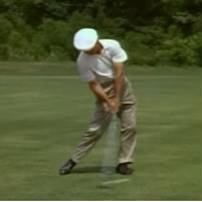
GEARS Hybrid session today. My quick notes… (mostly for me, but feel free to ask any questions you've got): First… working on limiting the pelvis turn. Clearly, I can do this when I want to do it. 🙂 This is just before the end of the backswing. Pelvis sway is a bit too big, though. Worked on that a bit more… As I noted, though the thrust is good, the laterals were getting a bit too big so my axis tilt was thrown off a little bit. Axis tilt and hip turn doing okay here. Right elbow could be better, but not worried about it today. I only made nine swings (with some rehearsals). GEARS Hybrid lets you work through things really quickly. Ignoring the downswing (it's still January!), this backswing was pretty good. Really happy with this one. This shows an inch of movement early, then starting to re-center during the backswing. Even the right image is before P4. This shows my pelvis trace from above on swing 9: go right, hang out there, and then go left during the end of the backswing. VERY linear. I'm apparently pretty good at this. Thanks for coming to my TED Talk.
 4 points
 -
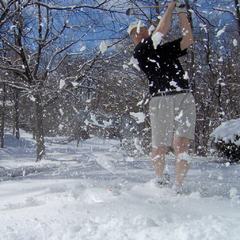
Caddies who wear shorts in obviously cold weather are just as stupid as football players who wear short sleeves in Lambeau in January. Nobody thinks your tough. We just think you're a moron3 points
-
Going to Florida for the usual February golf trip, and with our current weather, that date won't get here soon enough. Heading to Augusta GA for the Tuesday Master's practice round, will definitely get some golf in while I'm in the area for a few days. Hope to be able to catch up with @coachjimsc if he's around. Then it's back to Scotland first of July. Playing 7 new courses, can't wait for that. Then somewhere after that is the Rhode Island CC Member-Guest and then my normal October golf trip to Myrtle Beach.3 points
-
After a couple months of rest, I'm at Streamsong for my first golf in a while. Red course yesterday, 1 birdie, Blue today with one more, but I'm definitely jumping in at the deep end.2 points
-
I think you are posting in the wrong 🧵! And you are, as well @coachjimsc!2 points
-
This video is 11 years old and Dave Pelz has since passed on. And the video above reminded me of this gem of a thread: I have two issues with this video. First, Dave's math is once again wrong. Winners historically putt to a level where it accounts for 35% of their "win." Very little of a win is short game, leaving most of the 65% for the full swing. Second, and perhaps most importantly… he makes the opposite point he thinks he's making. He proves that the short game is easier and that putting is easier to reach a high level, and that most people have no hope of improving their full swing to the point where they can compete with a PGA Tour player. Because that's the area where better players separate themselves the most. That's the area where the biggest batch of strokes to be gained or lost exists for almost every player.2 points
-
Broke the seal last week with a birdie on 12. Only 17 more holes to go!2 points
-
Picked up the 1st Birdie for the year on #16 (usually the easiest to bird for me on my home course) in early Jan....now to get 17 more on the other 17 holes. Recent cold spell (ice, snow, etc) has completely shut down any play here in eastern NC.2 points
-
Eagled #18 today! It's a short par 4, about 290 yds from the Blue Tees. My drive was right, about even with the front of the green and just inside the cart path (so I didn't need relief). I chipped onto the green and it kept rolling, then went into the hole.2 points
-
I couldn't say. Not enough information. I am not a fan of saying what you should go with. I don't know your swing or what not. If you are a casual golfer, lets say if you shoot 50 or worse, I would say getting fitted is not going to help much. Blades will not make you better. Getting quality lessons and putting in effort would.2 points
-
Backswing I need to control the knee movement. Don’t let the left knee travel too far right. Which then keeps my hips from over rotating. Keep knee rotation controlled. The left knee was getting into an unstable compromising position. Overall feeling of, the hips and knees feel facing forward, resisting the torso turn. Just slide the hips right and turn torso with the lower body resisting the turn. The chest is going feel facing down more through out the backswing to keep the spine angle near 90 degrees (upright). I tended to lose axis tilt, leaning towards the target. Some feels are the right knee and hip gain flex as I turn. Left knee stays stable, don’t let it kick in. I think controlling the knees is what is going to work best. I have to do it with a weight shift. The right arm flexes more from the shoulder, gaining width between the tricep and chest. The right arm goes straight up away from my chest. Then allow my right shoulder blade to retract. This helps me get the full turn and keep the swing wide, not needing my right elbow to bend a ton. It also lets me feel like I finish the turn. Downswing Keep back of my neck, at the top of the shoulders, facing the target as I shift my lower body towards the target and lower the arms. That point on my neck shouldn’t shift a ton towards the target. At least not the amount I was doing. I need to maintain the spin tilt longer. It’s going to feel like my chest points down and away from the target as I get the left hip and knee over my left foot to push off of. it’s probably going to feel like I am way behind the ball relative to my head/torso. I should have my weight over the outside left part of my left heel earlier in the downswing and through impact. The inside of my left shoe should come off the ground a bit.2 points
-
I'd take a look at that article as you're late to get forward and thus have to "thrust" the hips forward and tip the head back a bit. It'll help shorten the swing a bit, too, which I think is actually a little higher on your priority list, but I think you can do both.2 points
-
3 Wood VS Driver: Is the accuracy worth the sacrificed distance? Have you ever had one of those days where your Driver is just not behaving? Luckily golfers have other options when their “Big Stick” is a little too crooked, the next closest being: a 3 wood. Look, 3 woods are...2 points
-
Sounds like the Newport Cup, and my trip to Scotland with @jsgolfer. Its always good to make new golf friends!2 points
-
A group I am joining is going to the R. T. Jones Trail in Alabama. Last week of March. We will be playing the RTJ courses near Birmingham and Huntsville. I am acquainted with one of the group. I will have 6 new friends, unless we get another 4, then it will be 10. 😉2 points
-
Oh, @ConorHealy, maybe you don't know our history, I went with him to Scotland a couple years ago, and was invited on this trip as well. Sadly, I couldn't fit it into my budget this year, but I know he likes to travel.2 points
-
Many times, though it's almost never an actual goal. Heck, I just played Erin Hills and Brown Deer Park in a few days at the end of 2025. 🙂1 point
-
I've played at TPC Deer Run. It's a nice course, and I can see where the Pros could go low.1 point
-
Hang 'em up, man. I mean, he has earned the right competitively to do whatever he wants. But, sheesh… he's not going to be competitive. Just hang 'em up. It's sad to watch. It taints the good days.1 point
-
Day 45: 2026.02.19 Some slow swings in the garden working on right arm position at the top of backswing. (Trying the Sun Day Red text for the first time.)1 point
-
Could Tiger Make a Miracle Masters Comeback? Woods' One-Word Response Tiger Woods, a 15-time major champion, has not ruled out making a stunning return to competitive golf at the 2026 […]1 point
-
Get well soon Vishal!1 point
-
Depends on time of the year. My regular ball is Srixon QStar Tour Divides, Good distance and it stops well inside 50 yards. My ball this fall was Callaway WarBirds. I accumulated five sleeves from scramble swag bags and optometrist visits (he rewards us golfers). I play it in fall - it's harder and has better distance on damp fairways, and stops OK on the softer greens. In my golf cabinet, it appears I have accumulated two dozen each of four different name-brand balls. Will use those in casual rounds this summer.1 point
-
Brutal! Get well soon, Vishal. Good to hear it's feeling strong and stable.1 point
-
I was thinking this could be a thread where thoughts/observations related to any of the pro tours are posted that don't already have an existing specific thread and don't necessarily need their own thread to be made. Anyways, good for Chris Kirk. As someone who has struggled with alcohol myself, it was good to see this dude back on top. How about that last wedge? Sheeeeesh1 point
-
whenever I see someone with shorts on here in January I think, “Oh, they’re optimistic.”1 point
-
If you explicitly adjust for field strength, the Tiger–Jack debate sharpens fast — because once you weight who was in the field and how good they were, raw major counts stop being the right currency. Below is the cleanest field-strength–adjusted framework, followed by what it implies for Tiger Woods and Jack Nicklaus. 1. What “field strength–adjusted” actually means (no hand-waving) A serious adjustment has four components: A. Field depth How many players in the field were legitimate win threats Measured by: OWGR equivalents, historical win rates, career major contention frequency B. Field breadth How global the field was How many tours fed elite players into the event C. Win concentration How many wins a small elite captured (A win in a top-heavy field is harder than a win in a flat field) D. Margin vs. field Separation from average competitor, not just second place This is exactly how WAR-style logic works in baseball — just translated to golf. 2. Era-level field strength comparison (baseline) Think of this as “average major field difficulty”, indexed to Tiger’s peak era = 1.00. Era Relative Field Strength Early 1960s ~0.55 Late 1960s ~0.65 1970s ~0.70 Early 1980s ~0.75 Late 1980s ~0.85 1997–2008 1.00 2009–2015 ~0.95 Modern (post-2015) ~1.00–1.05 This is not controversial among historians: Global pipelines Full-time professionalism Equipment & training parity all peak in Tiger’s era. 3. Field-strength–adjusted major wins Now apply that adjustment. Raw majors Nicklaus: 18 Tiger: 15 Adjusted majors (conceptual but grounded) If you weight each major by relative field strength at the time: Nicklaus’s 18 majors ≈ 12–14 Tiger-era equivalents Tiger’s 15 majors ≈ 15–16 Tiger-era equivalents So once you normalize: Tiger passes Jack in majors, not the other way around. And that’s before accounting for Tiger’s injuries. 4. Runner-ups and “lost wins” matter even more This is where the gap widens. Nicklaus 19 major runner-ups Many in shallower, U.S.-centric fields Variance was higher → more “near misses” Tiger Only 7 runner-ups But competed in denser elite fields Win suppression effect removed variance — fewer second places because he either won or wasn’t close If you convert: top-3s strokes behind winner field quality Tiger gains more “near-win value” per attempt than Jack. 5. Margin of dominance (this is decisive) Tiger Woods Frequently +2.5 to +3.0 strokes per round vs. field in majors at peak Largest adjusted margins ever recorded Dominance increases as field quality increases (rare!) Jack Nicklaus Elite but narrower margins Won via positioning and closing, not statistical obliteration Dominance less scalable to deeper fields If you run a WAR-style model: Tiger’s best seasons produce more “win value” than any Nicklaus season. 6. A thought experiment that clarifies everything Ask one neutral question: If you dropped 1972 Jack Nicklaus into the 2000 U.S. Open field at Pebble Beach, what happens? He probably: contends finishes top-10 maybe wins once in a while Now reverse it: Drop 2000 Tiger Woods into the 1972 Masters field. He likely: wins multiple times by historic margins and suppresses multiple Hall-of-Fame careers That asymmetry is the field-strength adjustment talking. 7. Why longevity arguments weaken after adjustment Nicklaus’s greatest edge is time. But: longevity is easier in lower-density competitive environments variance produces more chances to contend fewer global elite peers mean fewer weekly threats Tiger’s body broke down because: he pushed athletic ceilings under the most competitive conditions ever Adjusted for environment, Tiger’s shorter peak isn’t a flaw — it’s the cost of dominance. Final, adjusted verdict If you do not adjust for field strength: Nicklaus has the edge (18 > 15) If you do adjust properly: Tiger Woods becomes the GOAT Higher difficulty Higher dominance Higher efficiency per start Higher suppression of elite peers Nicklaus is the greatest career golfer. Tiger is the greatest golfer, period — once you account for who they were actually beating.1 point
-
I live about 3 miles from TPC Scottsdale, so I get to watch them build the 16th hole coliseum and all the other structures. They start work in early November, so 4 months to get ready. It's quite an experience.1 point
-
TPI (@mytpi) • Instagram reel 617 likes, 10 comments - mytpi on February 2, 2026: "Why test the Toe Touch if you don’t do it in your golf swing? Because it reveals how well you can hip hinge, a foundational movement for posture in golf. When... That's the original link… here's my YouTube copy of the same video: Here's what a… let's go with "knowledgeable" friend said to me about this video: Why on earth would you need to test someone's ability to touch their toes to see if they have the physical capability to get into a good set up position? At the beginning of the video Greg demonstrates the hip hinge movement he wants, just see if they can do that. No toe touching required! He also said they aren't interested in whether a golfer can actually touch their toes, he's trying to see how they hinge from their hips. This doesn't make any sense, as in their screening the criteria is pass or fail for touching toes, there's no scoring for how the person did it, other than that they didn't bend their knees… which is again moronic because you can bend your knees in the swing! The toe touch isn't a hip hinge test either: it's a hip hinge and spinal flexion test. Everyone that touches their does does so with a combo of both. It's a perfect example of a screening being a distraction rather than additive. Sure, having good mobility is better than not, but how can a toe touch be informative of the ability to get into a good setup? You can just ask the golfer to set up and see if they can do what you want! I think it's interesting how many PGA Tour players fail at the TPI tests. P.S. The Toe Touch test has always been, AFAIK, about the hamstrings. Tight hamstrings = gonna early extend. (But even that's not a truth.)1 point
-
IMO - you need to do a little more than just hit balls in a simulator and look at numbers, Here's something you can do - no simulator needed. Draw a straight vertical line on a ball with a sharpie, carefully place it on the mat with the line straight up & down and then hit. A mark will be left on the clubhead that matches the line on the ball. If it's pointing straight up & down the lie angle of the club is good. If it's leaning one way or the other, then you need clubs that are either more upright or flatter. Do it a few times to see how consistent (or not) your swing might be. Forged blades can be usually bent without a problem but cast clubs, not so much. I'd go with the CB's; classic forged irons...but not very forgiving with off-center hits.1 point
-
Just keep hitting them all and play with whatever you enjoy most! No one will be able to say more than that! If you want to try to be a little more scientific you could find a trackman. Some ranges have them for coaching they'll let you rent. You could beg into stalls at a golf store, say you'll come in at an odd hour when there's usually low traffic. Or go to an indoor/simulator place and just use the range feature instead of playing a course. Then basically do your own fitting. Hit 10 shots with like P, 7i, and 4i from each set and choose the one with the best results in terms of accuracy, distance, ball flight, spin, etc.1 point
-
Tried JV swing for about 2-3 months in 2025 and I believe it screwed up my left knee.1 point
-
Not exactly.1 point
-
I am pretty familiar with equipment and I have never heard of Par Ace Tour Blades. If they are old their lofts might be weak, which would cause the perceived distance loss. A few years ago I had a friend upgrade his old irons to modern equipment and his PW loft was 6* stronger than his old clubs. May not be the case, but just a thought. I think you might have better luck being fitted, or spending time on a launch monitor comparing these 4 irons. Then you can identify the distance gap between irons. You may find the ones you hit longer are really close together at the top of the bag. Good luck!1 point
-
What other guys? Rahm and Bryson were missed.1 point
-
Yea, I think I have played sixes for a while. We never called it that. I can't remember the name. We would remember who needs to be the partner by who is driving the carts. Team 1-6: Cart partners Team 7-12: Drivers versus Passengers Team 13-18: Cart Opposites We usually play Hi-Lo with that.1 point
-
4-ball better ball is the classic and for good reason. If you want to change things up a bit you could do a 2v2 scramble. Wolf is also a good game for 4 people. If you're feeling aggressive on the gambling, you can play a game where you get points on each hole. You calculate the points by sticking the scores you both get together to make a 2 digit number. If the better score is par or better then that number goes first. If it's bogey or higher then the worse score is first. So if you're playing a par 4 let's say and your partner makes 7 and you have a 5 foot putt for a par, that's the difference between 47 and 75. Then you have like 10c per point (or $100 per point - whatever floats your boat).1 point
-
Regardless, I don't like the heavy balls. They often have people doing something different. You have to REALLY accelerate to double-hit it. Much bigger fan of taking a fast, long backswing and… hitting the ball five feet. Things like that. I watched the video. Nothing all that new. Too much focus on the head movement, IMO. Tons of great putters have some head movement.1 point
-
Generally not at all a fan of heavy balls. I haven’t watched the video so maybe it is only a tiny bit heavier or something but the heavy balls I’ve used encourage acceleration or they go almost nowhere.1 point
-
I know this is somewhat back from the dead, but I think it's a good thread and it seems like the right place to post this. I saw a video on youtube today of James Nicholas working on his putting with Darrell Kestner. Video here: At 13:31 he produces a heavy weight ball and says "if your follow through is too long you'll double hit it". It seems to me like a pretty good way to train out the instinct to reaccelerate the putter after impact, but my google fu seems to be weak today. Does anyone know where to get one?1 point
-
For someone with a very consistent swing speed and ball strike, upgrades may improve performance. For everyday golfers, probably not. I'm a rather odd player. I usually get best performance from basic pro or tour heads, but with lighter stock shaft from the model's standard driver set up. (Yes, current EXS is an exception.) When I get a full driver fitting, I usually try a couple of modest upgrade (not super magic) shafts. Most of the time upgrade gives a couple of extra yards, or 10 yards less. Remember this about stock shafts: They are matched to a particular driver model to fit the type of player likely to adopt that model. Also, most OEMs offer a variety of stock shafts in their drivers. Test for which one works best. And, the final decider...1 point
-
Played once this year and made 1 birdie. Weather not looking good for a while to play again.1 point
-
1 point
-
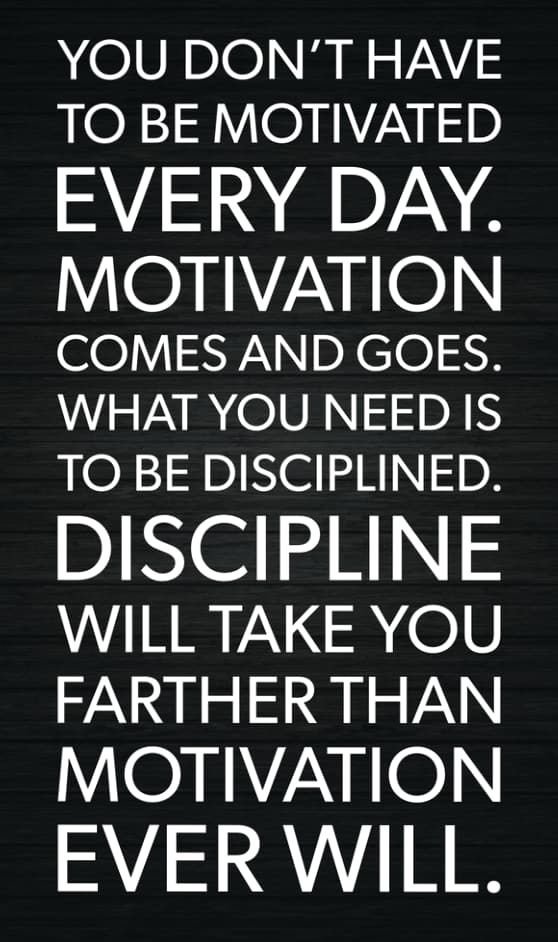
I'm going to use the same image I used in this thread about good practice being boring practice to kick off a discussion specifically about the word in the title: discipline. That image is to the right here. ---> Whether it's Scottie Scheffler using his training grip every day, or Justin Thomas learning that he needs to re-find his "home base" (X link) for his putting, or Tiger taking a year working on something before he calls Butch (or Hank, or Sean, or Chris) to say "I've got it," or even a golfer on the course aiming away from a flagstick, discipline may be the single most important skill in golf. Top three for sure (don't hold me to that! 🤣). I don't always stay disciplined. I don't record video quite as often as I should… I don't go quite as slowly as I should. And yet… I do those things about 15-20x as often as most golfers. Discipline is making yourself practice something at home at least 15 minutes a day (even if that's five three-minute sessions). Discipline is making yourself see no evil, hear no evil when looking at social media swing tips and just focusing on your one priority piece. Discipline is doing it with nearly constant feedback — recording videos, training aids or "stations" — at the right (almost surely slower than you most can possibly imagine at first) speeds. (Here's a search on X showing a few of my practice stations. They're often pretty similar because… I'm almost always working on similar things.) A typical golfer thinks I'm nuts. I've said on my podcast and written it here on GolfWRX that sometimes, a great practice session includes 50% shanks. Discipline is often not caring where the ball is going. More and more society seems to be chasing instant gratification. Can't beat that game? Just buy a level-up. Want to get some "likes"? Post an (edited, quite often faked in some way) selfie or something from the beach (ignoring the screaming kids 20 feet away, the sand fleas biting your legs, the sunburn you'll get from forgetting to put sunscreen on the back of your calves, etc.) and your friends will like it by rote and you'll feel a smidgen better about yourself. Golf is not that. Golf is not instant gratification. Golf is WORK. Improvement at golf requires trust that the light will be at the end of the tunnel, because unless you're highly sensitive to seeing light in a small change (or a larger change at a slowspeed), the light at the end of the tunnel is often a LONG ways off. (This is one of the reasons why some people — I'm not saying anyone here — love the "work on your short game and putting" approach. It's one of the closest things to instant gratification that you'll find in golf, limited as the gains may be. They can see a few more balls going in the hole and see tangible relatively quick improvement. Again, though, it's often small improvement, and it doesn't necessarily stick.) Few things are more frustrating than giving a great lesson to a 20 handicapper, having them pause, using mirrors, recording every third swing and reviewing it with them, making them hit the ball only 50 yards or so, and leaving them with a very clear message about what and how to practice… only for them to text you the next day with "I went to the range, it went horribly, here's a video of my swing (at full speed, with no rehearsals), what am I doing wrong?" (This is particularly frustrating when you've helped someone for free and they seem to understand and believe everything, and then you see the same type of response and no evidence of them actually putting in the work.) Even super experienced golfers and lower index players often think (subconsciously at least) that they're going to "get better" from just taking a lesson and practicing for 40 minutes during that lesson. After all, most golfers start to hit it better at the end of the lesson than they were at the beginning. But… golf doesn't work that way. Not at full speed, not quickly. Being disciplined isn't much fun (getting better can be, but there are a lot of valleys between the small peaks). It means spending 15-60 minutes a day (or five days a week, or whatever) being focused on taking small steps. It means knowing that some days you may actually take a step back, but it won't be as far back as going two or three days without putting in the work. It means knowing that the journey of a thousand miles begins with a single step. How disciplined are you? Could you spend ten minutes less scrolling Instagram or X and spend that on your golf game? While you're waiting for your popcorn, could you use the reflection in your patio door window to work on your golf swing? Can you go at the right speed, with a station set up, and record yourself frequently? Can you? Or, more importantly… Will you?
1 point
-
Couple of things. I remember watching a video that Sasho Mackenzie did where he talked about clubhead speed and how a faster backswing can make your clubhead speed go up. Theory was that the force you have to apply to slow the club down at the top of the backswing gives you a head start on applying that force during the downswing. That does make sense to me. I think this ties more closely to the AMG video than the original post in this thread. The steeper downslope in the AMG video would tend to result in a steeper upslope once the speed starts going in the different direction post-transition. Secondly there was some discussion a while ago about how far the clubhead travels. From some pictures in a book I have, the clubhead with driver is traveling approximately 16 feet on the backswing and 14 feet on the downswing to impact. The 75 inches that Erik came up with on page 1 for the system radius is probably not far off, but 75 inches equates to a circumference of about 39 feet all the way round the circle, not 16 feet. 75 x 2 x pi is 471. 39 feet is 468 inches. For the backswing, it's a little more than half of that, but the setting of the wrists shortens the radius quite a bit, so 16 feet feels about right (and matches my measurement). The original 18 feet in the tweet is about right, especially with a little bit longer of a swing than the sample I have.1 point
-
I've been teaching online longer than most, all at Evolvr.com. I've taught (mainly Mike Carroll, the Fit for Golf guy) on CoachNow. I've recently switched over to using Skillest, and would like to invite you to join me there. If you've ever been on Evolvr, you can visit there for a lower cost plan that's similar to what I've always offered on Evolvr. If you're new to working with me, please consider working on your game with me at Skillest. My page is here: https://skillest.com/@iacas. Thanks! I'll see you there.1 point
-
31 Majors played between 2018-2025. 2020 British Open was not held. Masters: Rory, Rahm and Hideki US Open: Matt Fitzpatrick and Rahm PGA: no international winners during this span Open: Francesco Molinari, Shane Lowry, Cameron Smith. 8/31 International winners: 25.8%.1 point
-
Suppose you have a backswing that is too long. Now, there could be a number of actual reasons for it: You hinge your wrists late, so you delay the end of your backswing to let the wrists hinge the amount that feels comfortable. The latter half of the backswing is too fast, so while your brain says "okay, that's long enough" it still takes longer than it should to come to a stop. The shift of pressure/weight to the back foot is late, and/or the shift forward is late, so the player has "a backswing" and "a downswing." Players who shift pressure at the right time (toward the target) have an easier time stopping the backswing at the right time because they're literally beginning to move in the downswing direction with some of their body. But… sometimes Bob Newhart nails it above. Sometimes, it's a matter of willpower. It's a matter of just saying "I'm going to make what feels like half a backswing." So… What's the reason why you over-swing? 😄 No, but seriously. Some things in golf are just a matter of willpower. Sometimes, you can DO the movement, you just have to make yourself do it. Another example: having a "quiet eye" when putting. Sure, almost everyone wants to look up early. But… with enough training and willpower… you can have a quiet eye when you putt, and not look up immediately. Another… target selection. You can learn to make yourself aim away from the flag on holes where that's the prudent play. What other things in golf do you think are a matter of willpower?1 point
-
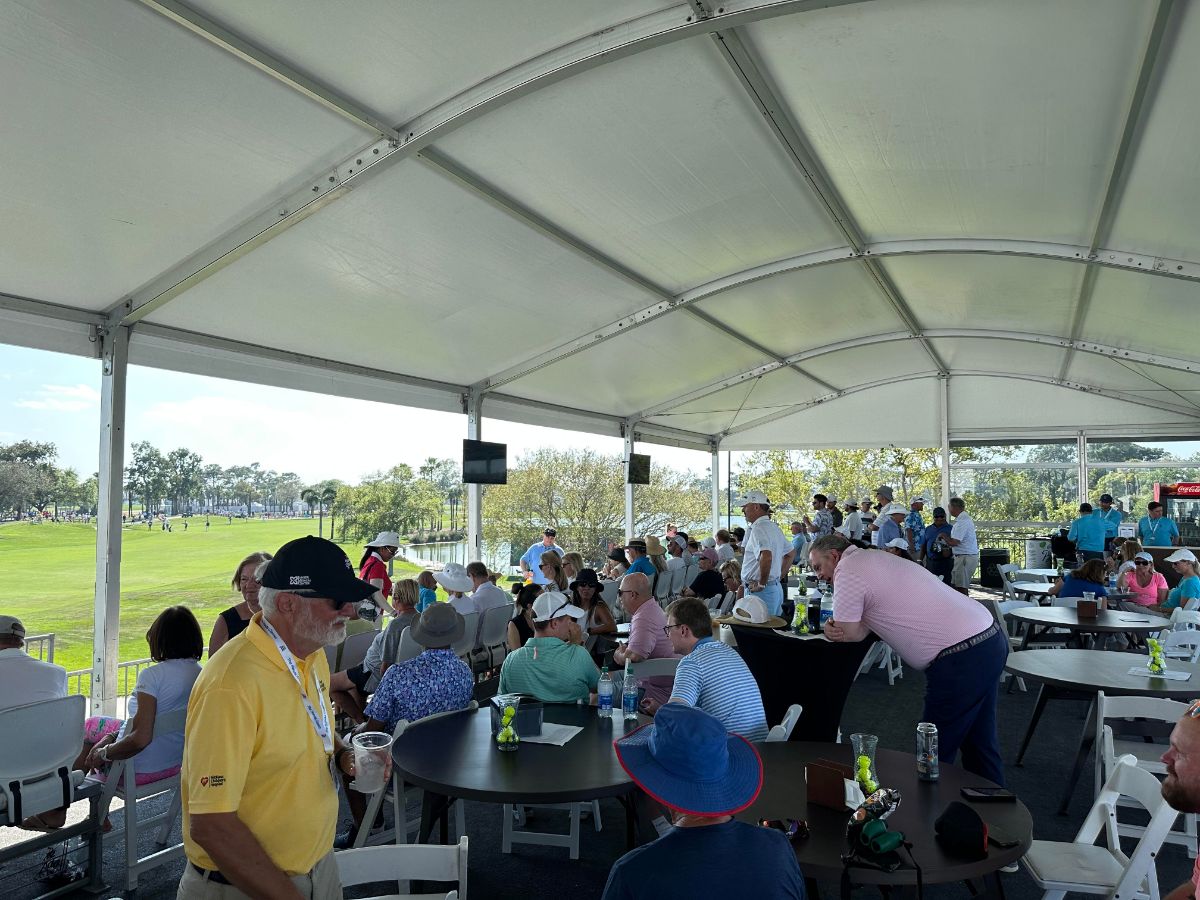
Yep, it was a great event despite the weak field. Plus, I felt obligated to go as this was the last Honda Classic. They're probably staying at PGA National, but they'll have a new sponsor and a rebrand next season, hopefully with a better place in the schedule so they can attract the top players again. I believe Honda is the longest running sponsor on the PGA Tour, so it's the end of an era. The crowds were lively and rowdy as usual, especially around 17. I made sure to avoid that area yesterday 😄 but that's quite the nexus of several key locations on the course, so it was inevitable I was forced to listen to a myriad of inappropriate yelling. It's not as bad as it used to be at least. Justin Suh has a weirdly wide driver setup: I mostly just chilled by the 9th green as it was like 87 and sunny all day, possibly the hottest Honda Classic on record. The attendance was better than I would've thought given the field. People really love their golf here though and turned out anyway. That's a pic of the final group. Most people don't watch the 9th green, so you don't get the crazy yelling here like you do on most of the back nine. Hopefully the stars can fit this tournament into their schedules again next season. I think the last star-filled tournament was 2018? Been a while.
1 point
-
I would tend to agree. Just one look at the size of the potential field should tell you almost all you need to know. The 10 best players at anything from a town of 10,000 is highly unlikely to be better than the 10 best players from a town of 1,000,000. I'm not saying golf's grown 100x from the 60s to the 00s… but it's grown quite a bit. Especially when you include the growth of the game outside of the U.S. - Europe, Asia, etc. Edit (2020-11-22): https://thesandtrap.com/forums/topic/74049-strength-and-depth-of-field-in-jacks-day-and-tigers-day/?do=findComment&comment=15141711 point












This leaderboard is set to New York/GMT-05:00
Announcements
-
TST Partners






Direct: Mevo, Mevo+, and Pro Package.
Coupon Codes (save 10-20%): "IACAS" for Mevo/Stack/FitForGolf, "IACASPLUS" for Mevo+/Pro Package, and "THESANDTRAP" for ShotScope. 15% off TourStriker (no code). -
Posts
-
-
.thumb.JPG.640dd6f31fe7f6aef91f879119bae1d9.JPG)
-
 Many times, though it's almost never an actual goal. Heck, I just played Erin Hills and Brown Deer Park in a few days at the end of 2025. 🙂
 -

By dennyjones · Posted
I've played at TPC Deer Run. It's a nice course, and I can see where the Pros could go low. -

-